Dead Tree Removal in St. Paul: Don’t Wait Until It Falls
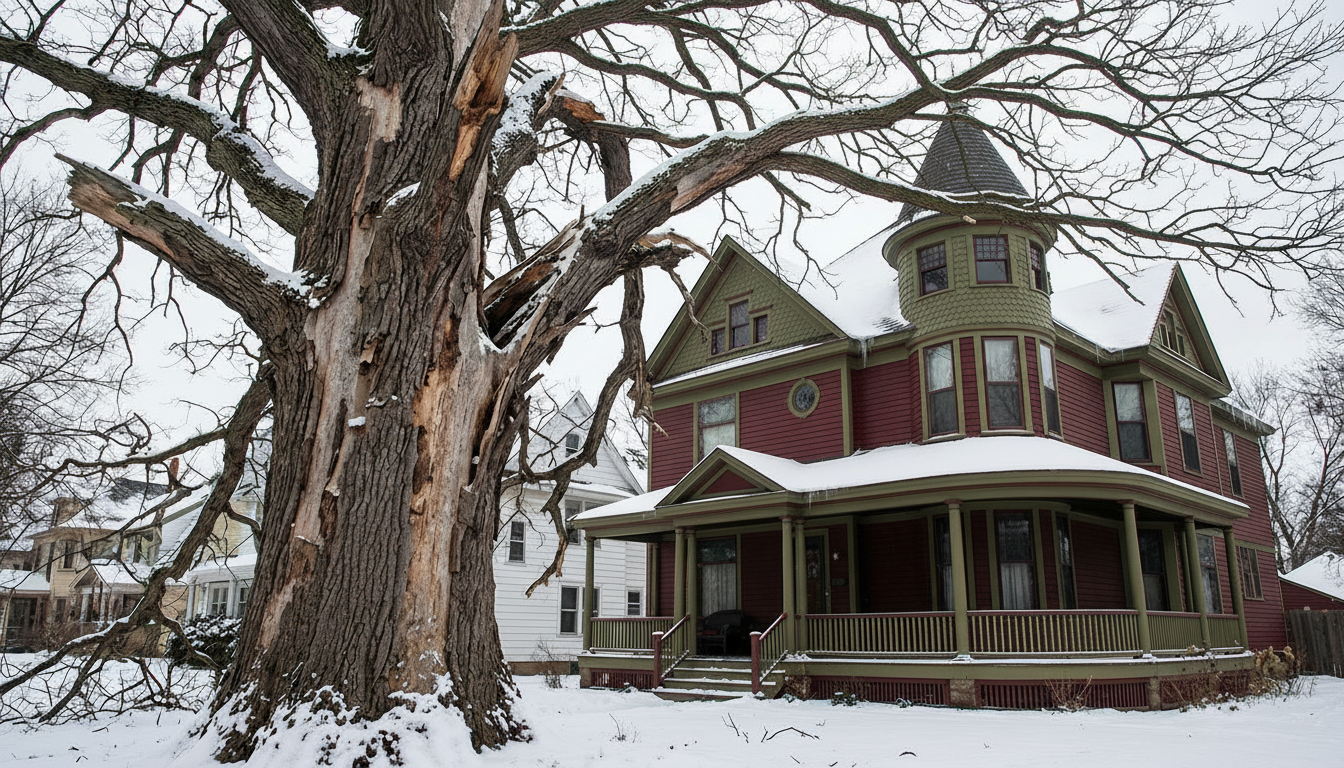
Not every bare tree in winter is a dead tree. Minnesota’s long dormant season makes it challenging to distinguish between healthy sleeping trees and those that pose real dangers to your St. Paul home.
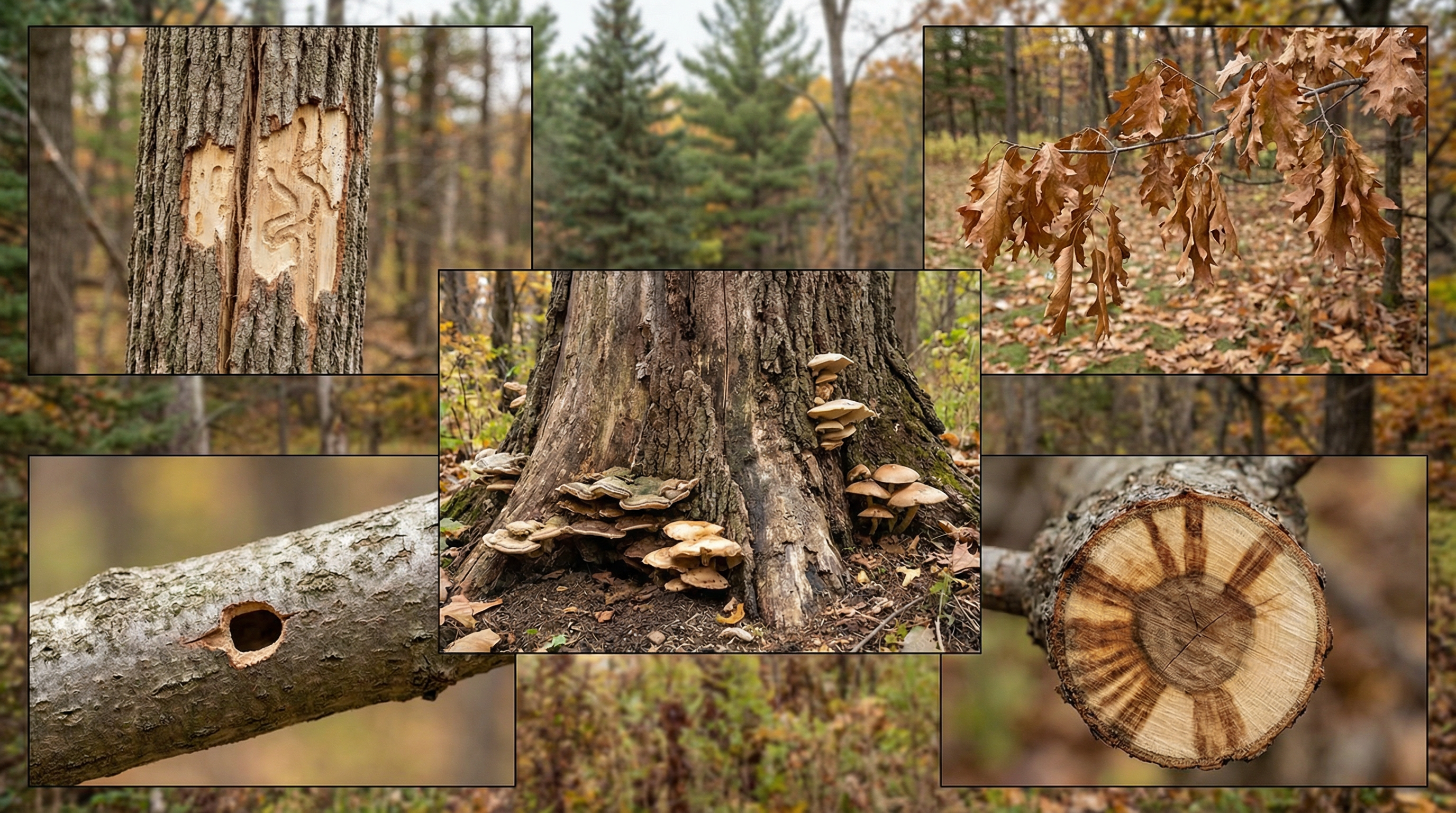
A truly dying tree shows specific warning signs that go beyond seasonal dormancy. Look for bark that peels away easily, revealing dry wood underneath. Hazardous trees often have brittle branches that snap with a dry crack instead of bending. You might notice extensive woodpecker damage—these birds know when insects are feeding on dead wood beneath the bark.
During growing season, the clearest sign is timing. If neighboring trees of the same species are fully leafed out by late May, but yours shows no green growth, you’re likely looking at a dead tree that needs professional assessment.
The wood itself tells the story. Healthy trees have living tissue called cambium just beneath the bark. When this layer dies, the tree can no longer transport water and nutrients. In St. Paul’s humid climate, dead wood begins decomposing rapidly through fungal decay and insect activity.
Standing dead trees lose structural strength quickly once biological processes stop. What looks stable today might fail during the next ice storm or high wind event that’s common along our Mississippi River corridor.
Why St. Paul’s Weather Makes Dead Trees More Dangerous
Our capital city’s location creates unique conditions that accelerate tree failure. St. Paul’s humid continental climate subjects trees to extreme temperature swings—from -30°F winters to 95°F summers—that healthy trees survive but dead trees cannot withstand.
The freeze-thaw cycle hits our area particularly hard due to our proximity to the Mississippi River and urban heat effects. Water enters cracks in dead wood during warm spells, then expands when temperatures drop, progressively splitting the tree apart from the inside. This explains why many dangerous trees fail during late winter thaws rather than summer storms.
St. Paul’s mature neighborhoods like Crocus Hill and Merriam Park face additional challenges. Many trees were planted 50-80 years ago and now deal with soil compaction, salt damage from winter road treatments, and construction impacts that weaken root systems. When these stressors combine with diseases that have claimed thousands of trees throughout Ramsey County, healthy trees can quickly become hazardous trees.
Wind patterns along the river valley create another concern. The Mississippi acts as a wind tunnel during storms, with gusts often exceeding 60 mph. Dead trees that might remain stable elsewhere become immediate threats when exposed to these enhanced wind loads, especially the large cottonwoods and silver maples common near the riverfront.
The Timeline: When Dead Trees Become Dangerous
Understanding when a dead tree becomes a dangerous tree can help you make informed decisions about tree removal before emergency situations develop.
Immediately after death (0-12 months): The structure remains relatively sound, though this period shortens for trees killed by boring insects like emerald ash borer. Initial shrinkage creates surface cracks, but major structural integrity remains.
Second year: Fungal decay organisms establish throughout the trunk and branches. White rot fungi, common in Minnesota’s humid climate, begin breaking down lignin—the compound giving wood its strength. This process accelerates in standing dead trees with bark damage or woodpecker holes.
Third year and beyond: Most dead trees in St. Paul show significant structural compromise. Branch failures become common, starting small and progressing to major limbs. Root decay accelerates in our clay soils, where poor drainage creates conditions favoring root-rotting fungi.
The critical failure point typically occurs between years 3-5, though environmental factors can accelerate this timeline dramatically. Ice storms like the devastating 1998 event that damaged thousands of Twin Cities trees can cause immediate failure of compromised hazardous trees.
Species matters too. Ash trees killed by emerald ash borer become dangerous trees within 2-3 years, while oak trees may stand 5-7 years before major failure. However, in St. Paul’s challenging climate, these timelines often compress significantly.
Insurance Won’t Cover What You Should Have Known
Your homeowner’s insurance policy contains specific language about tree removal and property damage that many St. Paul residents don’t understand until filing a claim. The difference between “act of God” and “negligent maintenance” can mean full coverage versus complete claim denial.
Insurance companies consider standing dead trees known hazards after a reasonable identification period. While policies vary, the standard holds homeowners responsible for obvious dangerous trees that reasonable people should recognize as threats. A dead tree showing clear decline for months may not be covered if it damages property or injures someone.
Documentation becomes crucial in disputes. Professional hazard tree assessments from ISA Certified Arborists provide evidence that either a tree appeared healthy before sudden failure (supporting coverage) or that removal was recommended but delayed (potentially limiting coverage).
Property damage extends beyond obvious structural impacts. Secondary damage from delayed cleanup, mold growth from roof leaks, and landscape restoration easily double initial repair estimates. Emergency tree removal during storms costs 2-3 times more than planned removal during favorable weather.
Liability adds another complexity layer. If your hazardous tree damages a neighbor’s property or causes injury, your liability coverage may be primary compensation. However, if insurers determine you knew or should have known about the dangerous tree condition, coverage may be limited or denied.
When to Call a Professional Arborist
Determining whether a tree requires immediate tree removal requires expertise beyond basic visual inspection. ISA Certified Arborists use standardized protocols, including Tree Risk Assessment Qualification (TRAQ) methodology, to evaluate hazardous trees and provide defensible recommendations.
Professional assessment begins with species identification and health history evaluation. Different species exhibit varying failure patterns crucial for accurate risk assessment. American elms lining many St. Paul streets may show extensive crown dieback from Dutch elm disease while maintaining structural integrity for years, while emerald ash borer-killed trees become dangerous trees much more rapidly.
Advanced diagnostic techniques include resistograph testing to measure internal wood density, sonic tomography to identify decay columns, and pull-testing to evaluate root stability. These tools provide objective structural integrity data that visual inspection alone cannot determine—particularly important for large trees near homes or high-traffic areas like Grand Avenue.
Assessment also considers site-specific factors influencing failure consequences. A dead tree in an open yard poses different risks than one overhanging homes, playgrounds, or busy streets. Target assessment—evaluating potential damage if the tree fails—forms a crucial component of professional risk evaluation.
Dead tree removal in St. Paul protects your most valuable investments while ensuring family safety. Our capital city’s unique climate challenges mean hazardous trees pose greater risks and fail more unpredictably than in temperate regions.
The evidence is clear: prompt action saves money, prevents property damage, and eliminates liability risks that can follow homeowners for years. Whether you’re dealing with emerald ash borer damage in Frogtown, storm-damaged oaks in Highland Park, or aging elms along Summit Avenue, professional assessment and timely tree removal provide the protection your property deserves.
At Total Tree Care, our ISA Certified Arborists have helped thousands of St. Paul homeowners navigate dead tree situations safely and cost-effectively. We serve St. Paul, Minneapolis, Bloomington, Richfield, Rosemount, Farmington, and Hastings with comprehensive hazard tree assessments, detailed insurance documentation, and professional removal services that protect your property while preserving your landscape’s beauty.
Don’t wait until your dangerous tree becomes an emergency. Contact Total Tree Care today at (651) 331-1042 for your free hazard assessment. Discover why St. Paul homeowners trust our expertise to keep their families and properties safe throughout the Twin Cities metro.
