How Proper Tree Pruning Protects Your Bloomington Property Value
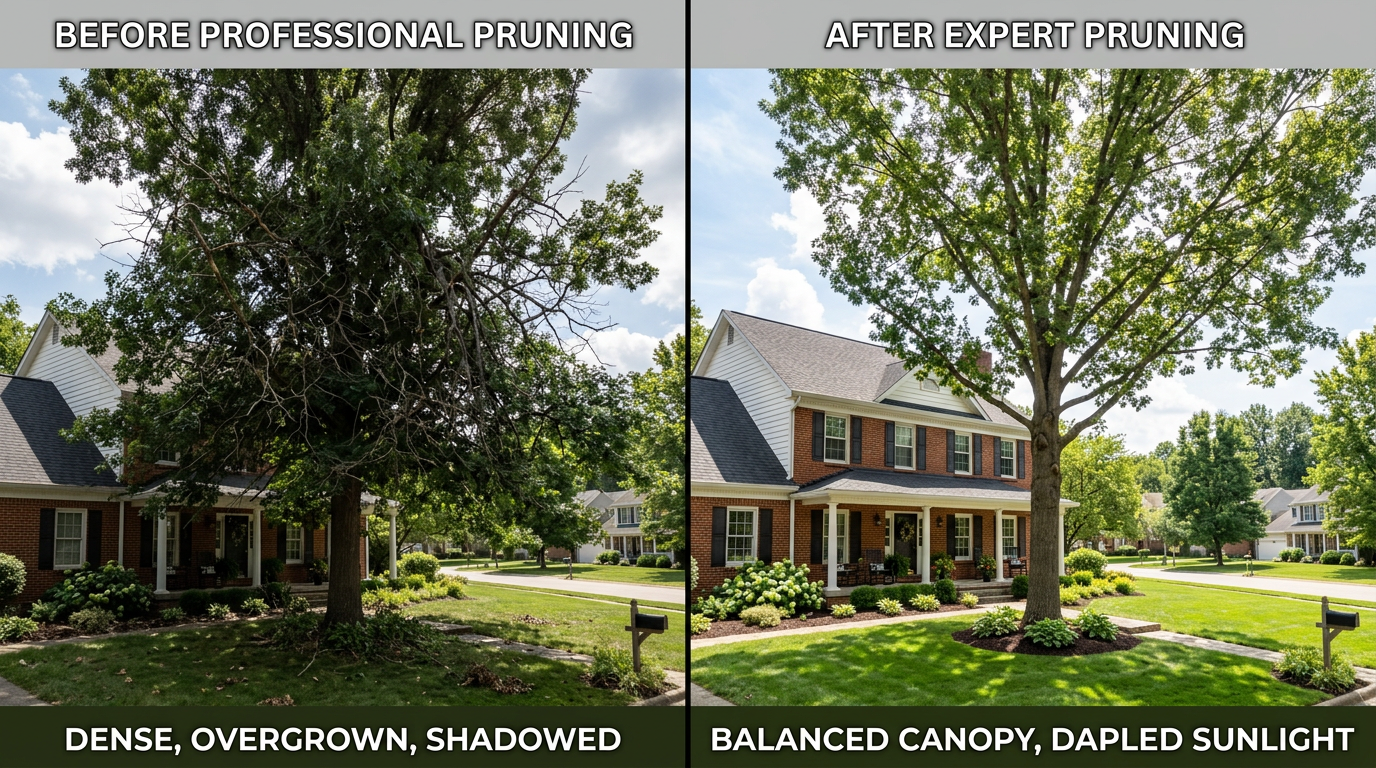
Tree pruning involves the selective removal of branches to improve tree structure, health, and appearance. Unlike topping or random cutting, professional pruning follows ANSI A300 standards that preserve the tree’s natural form while addressing specific objectives. For Bloomington homeowners, this means working with the unique characteristics of our region’s dominant species—red oaks, sugar maples, and American elms—to maximize both tree health and property appeal.
The financial impact of proper tree maintenance is substantial. Real estate studies consistently show that well-maintained mature trees can add significant value to properties, depending on species, size, and placement. A mature oak in your front yard doesn’t just provide shade; it represents decades of growth that new homeowners would pay premium prices to avoid waiting for. However, this value disappears quickly when trees become overgrown, diseased, or structurally compromised.
Crown cleaning removes dead, dying, and diseased branches that create both safety hazards and aesthetic problems. In Bloomington’s freeze-thaw climate, deadwood accumulates rapidly as winter damage weakens branch attachments. Professional arborists identify these hazards before they become expensive problems, preserving the tree’s structural integrity while maintaining the clean appearance that buyers expect in established neighborhoods.
Structural pruning addresses poor branch architecture that could lead to failure during Minnesota’s severe weather events. By removing competing leaders, correcting narrow branch angles, and reducing end weight on extended limbs, certified arborists create trees that can withstand ice storms and high winds while maintaining their valuable canopy coverage.
Why Bloomington Trees Require Specialized Pruning Approaches
Bloomington’s location in the humid continental climate zone creates unique challenges that generic tree care approaches can’t address. Our harsh winters, with temperatures dropping below -20°F, stress trees in ways that require specialized knowledge of species-specific responses. The freeze-thaw cycles common along the Minnesota River valley create additional complications as repeated temperature fluctuations damage branch tissues and create entry points for decay organisms.
Emerald ash borer has fundamentally changed tree care priorities in Bloomington. With thousands of ash trees throughout the city, homeowners face difficult decisions about treatment versus removal. Professional tree pruning can extend the life of treated ash trees by removing stressed branches and improving overall vigor, but only when performed by arborists who understand EAB biology and treatment protocols. Improper pruning during active EAB infestations can actually accelerate tree decline.
The clay soils common in Bloomington’s river bluff areas create additional stress on tree root systems, making proper canopy management even more critical. Trees struggling with compacted soils and poor drainage cannot support oversized canopies, making crown thinning essential for matching canopy size to root capacity. This is particularly important for the large oaks and maples that define property values in established neighborhoods like East Bloomington and Oxboro.
Spring storms in the Twin Cities metro regularly produce winds exceeding 60 mph, turning improperly maintained trees into projectiles that can destroy homes and vehicles. Professional arborists understand how to reduce wind resistance through selective branch removal while preserving the full, attractive canopy that maintains property appeal. This balance between safety and aesthetics requires expertise that only ISA Certified professionals possess.
The Professional Tree Pruning Process: What Bloomington Homeowners Can Expect
Professional tree pruning begins with a comprehensive assessment by an ISA Certified Arborist who evaluates tree health, structural integrity, and specific objectives for your property. At Total Tree Care, we examine each tree’s species-specific requirements, current condition, and relationship to your home and landscape. This assessment identifies priority issues like deadwood removal, structural defects, and clearance needs while developing a pruning plan that enhances both safety and appearance.
Timing considerations are crucial in Minnesota’s climate. Most deciduous trees benefit from dormant season pruning between November and March, when energy reserves are concentrated in roots and wound response is minimized. However, oaks require special attention to prevent oak wilt transmission—we avoid pruning healthy oaks between April and October unless emergency conditions exist. Spring-flowering trees like crabapples and serviceberries are pruned immediately after bloom to preserve next year’s flower production.
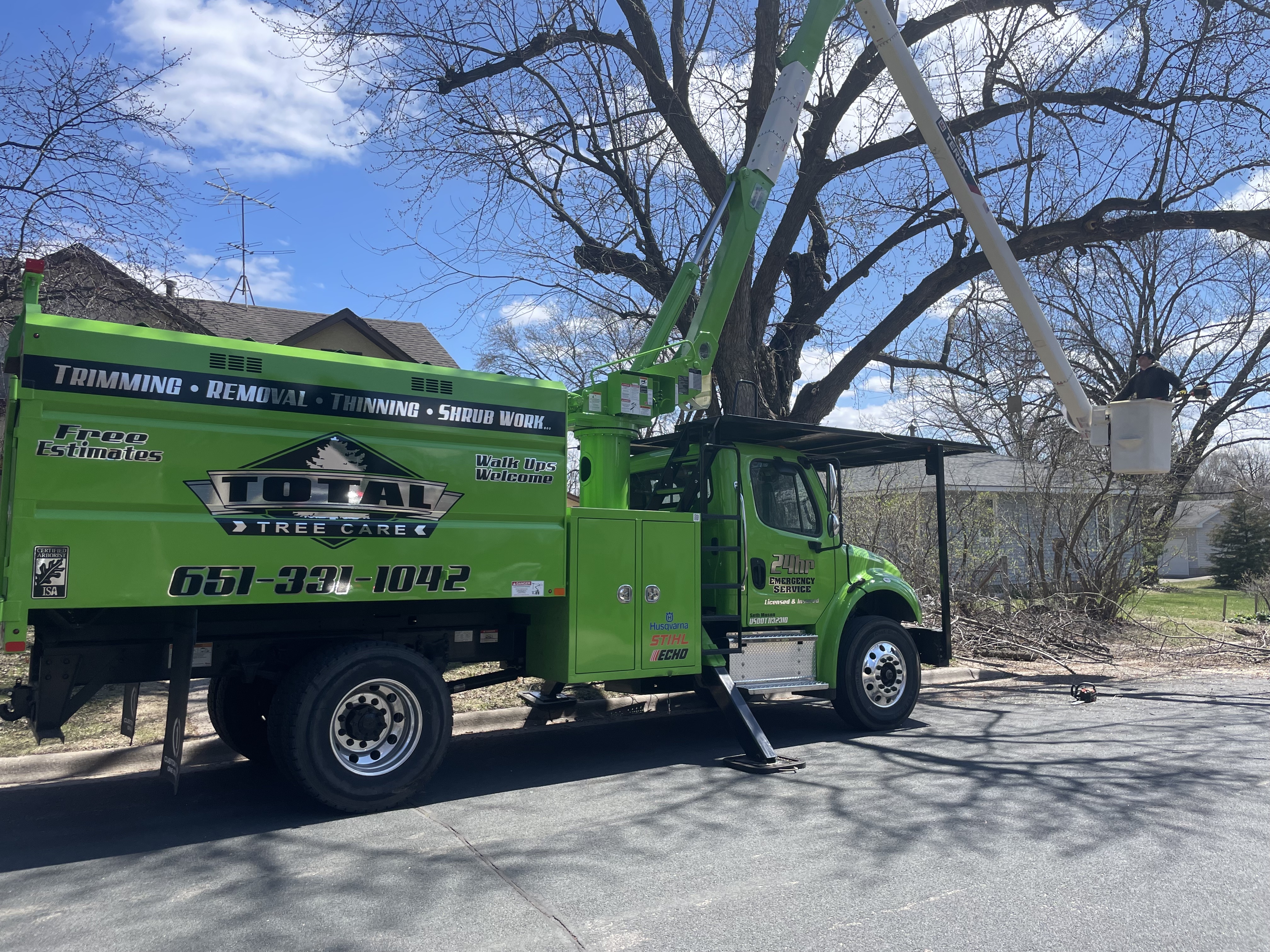
The actual pruning process follows strict ANSI A300 standards that specify proper cutting techniques, branch removal procedures, and wound management. Our certified climbing arborists use specialized equipment including climbing saddles, rigging systems, and professional-grade saws to access all areas of the canopy safely. Each cut is made at the proper location—just outside the branch collar—to promote rapid wound closure and prevent decay entry.
Crown raising removes lower branches to provide clearance over driveways, walkways, and structures while maintaining the tree’s natural form. In Bloomington’s suburban setting, this often means creating adequate clearance over sidewalks and streets, following city ordinances while preserving maximum canopy coverage. Proper crown raising maintains the tree’s structural integrity while improving sight lines and reducing maintenance conflicts.
Recognizing When Your Bloomington Trees Need Professional Attention
Deadwood accumulation is the most obvious sign that your trees need professional care. Dead branches appear brown or gray, lack leaves during the growing season, and often have loose or missing bark. In Bloomington’s climate, winter damage creates significant deadwood that must be removed before spring storms turn these branches into projectiles. Professional arborists can identify dead and dying branches that homeowners might miss, preventing property damage and liability issues.
Structural problems develop gradually but create serious safety hazards if left unaddressed. Look for branches with narrow attachment angles, multiple stems competing for dominance, or branches that rub against each other. These defects are particularly common in fast-growing species like silver maples and box elders that are prevalent in older Bloomington neighborhoods. Early intervention through structural pruning can correct these problems before they require expensive tree removal.
Clearance issues develop as trees mature and branches extend toward structures, utility lines, or traffic areas. Minnesota law requires property owners to maintain clearance over public sidewalks and streets, making regular crown raising a legal necessity in many situations. Additionally, branches touching roofs create pathways for squirrels and other pests while causing damage to shingles and gutters during wind events.
Overgrown canopies reduce property appeal and create maintenance problems. Trees with dense, unpruned canopies block light to lawns and gardens, create excessive shade that reduces property usability, and present increased wind resistance during storms. Professional crown thinning can restore balance between shade provision and light penetration while reducing storm damage risk.
Seasonal Pruning Considerations for Minnesota Trees
Understanding when to prune trees in Minnesota’s climate is crucial for maintaining tree health and maximizing property value. The dormant season, typically from late November through early March, provides the ideal window for most pruning activities. During this period, trees have moved their energy reserves into root systems, making them less susceptible to stress from branch removal.
However, certain species require special timing considerations. Oak trees should never be pruned during the growing season (April through October) due to oak wilt risk—a devastating disease that spreads through fresh wounds and can kill mature oaks within a single season. This timing restriction is particularly important in Bloomington, where oak wilt has been detected in several neighborhoods near the Minnesota River.
Spring-flowering trees like crabapples, serviceberries, and ornamental cherries should be pruned immediately after their blooms fade. Pruning these trees during dormancy removes the flower buds that have already formed, eliminating the spring display that adds significant ornamental value to your landscape.
Choosing the Right Tree Care Professional in Bloomington
ISA Certification represents the gold standard for arboricultural knowledge and should be your first requirement when selecting a tree care company. ISA Certified Arborists have demonstrated comprehensive knowledge of tree biology, pruning standards, and safety procedures through rigorous testing and continuing education requirements. At Total Tree Care, our ISA certification ensures that every pruning decision is based on current scientific understanding rather than outdated practices.
Insurance and licensing protect both you and the workers on your property. Legitimate tree care companies carry comprehensive general liability insurance and workers’ compensation coverage, protecting homeowners from financial responsibility if accidents occur. Always request proof of insurance before allowing any tree work to begin, and verify that coverage limits are adequate for the scope of work being performed.
Local experience matters significantly in tree care because regional climate, soil conditions, and pest pressures require specialized knowledge. Companies serving the Twin Cities metro understand the specific challenges facing Bloomington trees, from emerald ash borer management to storm damage prevention. This local expertise translates into more effective pruning decisions and better long-term outcomes for your trees.
Equipment and safety standards distinguish professional companies from fly-by-night operators. Legitimate arborists use proper climbing equipment, follow ANSI Z133 safety standards, and maintain their equipment in good working condition. Be wary of companies that use spikes to climb healthy trees (which damages bark and creates decay entry points) or lack proper safety equipment for aerial work.
Tree Pruning Techniques That Maximize Property Value
Crown cleaning forms the foundation of value-preserving tree care by removing dead, dying, diseased, and weakly attached branches. This technique immediately improves tree appearance while eliminating safety hazards that could damage property or injure family members. In Bloomington’s harsh climate, regular crown cleaning prevents the accumulation of storm-damaged wood that makes trees look neglected and reduces curb appeal.
Crown thinning selectively removes branches throughout the canopy to reduce density while maintaining the tree’s natural shape. This technique is particularly valuable for mature maples and oaks in Bloomington’s established neighborhoods, where overgrown canopies can make properties feel dark and enclosed. Proper thinning allows more light to reach lawns and gardens while reducing wind resistance that could lead to storm damage.
Crown raising removes lower branches to provide clearance and improve sight lines without reducing the overall canopy size. This technique is essential for maintaining property accessibility while preserving the mature tree coverage that buyers value. In Bloomington’s suburban setting, crown raising often involves creating clearance over driveways and walkways while maintaining privacy screening between properties.
Your Bloomington property’s mature trees represent decades of growth and substantial added value. Professional tree pruning protects this investment by maintaining tree health, preventing storm damage, and preserving the aesthetic appeal that makes established neighborhoods so desirable. In Minnesota’s challenging climate, proper tree care isn’t optional—it’s essential for protecting both your property value and your family’s safety.
Total Tree Care’s ISA Certified Arborists understand the unique requirements of Bloomington’s urban forest. From the river bluff areas to the commercial corridors, we’ve helped homeowners throughout Hennepin County maintain healthy, valuable trees that enhance their properties for generations. Our commitment to ANSI A300 standards and ongoing education ensures that your trees receive care based on the latest scientific understanding.
Don’t wait until storm damage or structural failure forces expensive emergency action. Contact Total Tree Care today for a comprehensive tree assessment and pruning estimate. Protect your property value and your family’s safety with professional tree care that Bloomington homeowners have trusted for over a decade. Call us (651) 318-4480 or visit totaltreecaremn.com to schedule your consultation with our ISA Certified Arborists.
