Oak Wilt in Minneapolis: Prevention, Symptoms, and Treatment Options
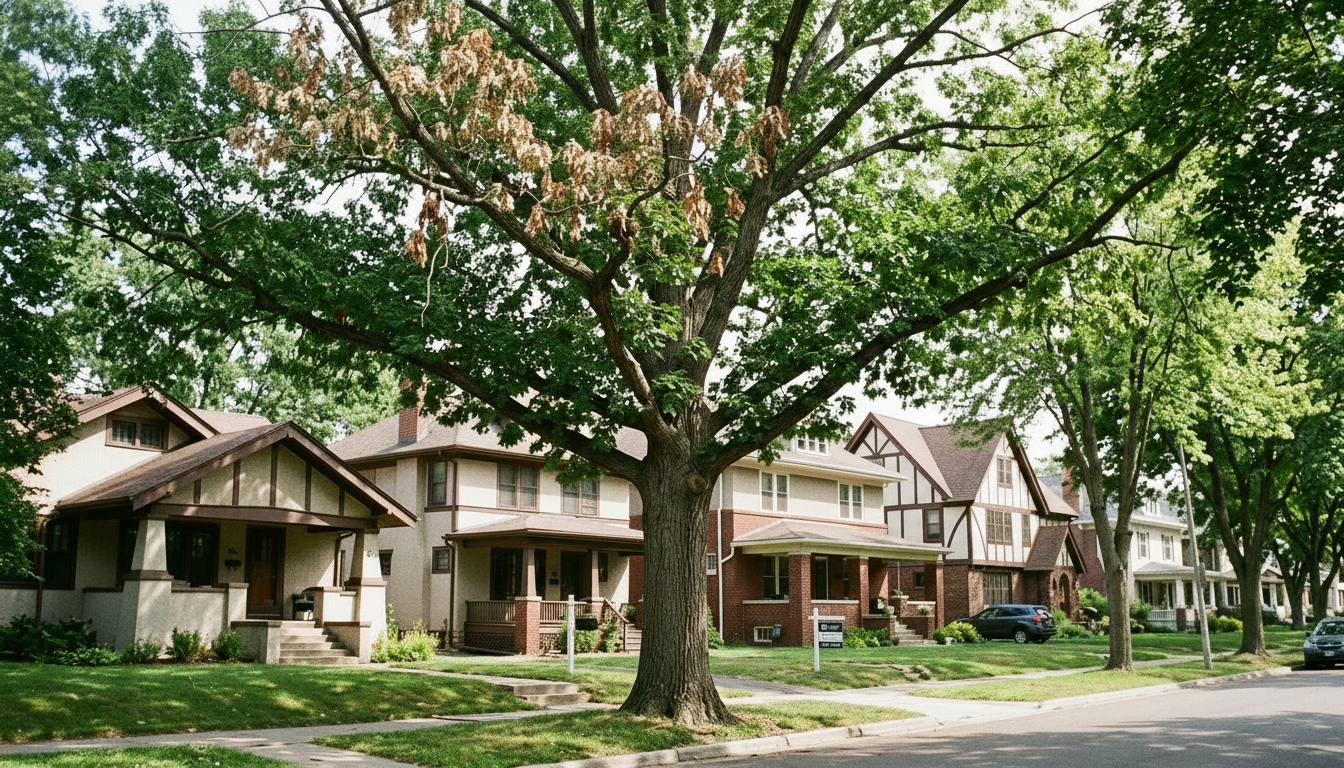
Oak wilt is a lethal fungal disease caused by Ceratocystis fagacearum that attacks the vascular system of oak trees, effectively cutting off their water and nutrient transport. In Minneapolis’s humid continental climate, this pathogen thrives during warm months when sap beetles are most active, making proper timing of tree care activities absolutely critical.
The disease spreads through two primary pathways that are particularly relevant to Minneapolis oak tree care. Root graft transmission occurs when the fungus moves through interconnected root systems between neighboring oaks—a common scenario in mature Minneapolis neighborhoods where large oaks have been growing in proximity for decades. Insect transmission happens when sap beetles carry fungal spores from infected trees to fresh wounds on healthy oaks, which is why the timing of oak pruning is so crucial in our region.
Red oak species, including northern red oak and pin oak commonly found throughout Minneapolis parks and residential areas, are extremely susceptible to oak wilt and typically die within one growing season of infection. White oak species, while more resistant, can still succumb to the disease over several years. Given Minneapolis’s significant oak population—from the stately trees around the Chain of Lakes to the mature specimens in established neighborhoods like Tangletown and Seward—understanding these transmission patterns is vital for effective prevention.
Why Minneapolis Oak Trees Face Elevated Risk
Minneapolis’s dense urban canopy and mature tree populations create ideal conditions for oak wilt disease transmission. The interconnected root systems common in established neighborhoods from Linden Hills to Como Park provide pathways for the fungus to spread rapidly between trees, often affecting entire groves before homeowners realize there’s a problem.
Hennepin County’s confirmed oak wilt presence means the disease is actively circulating in our local ecosystem, with documented cases throughout the Minneapolis metro area. The Minnesota Department of Agriculture has identified numerous infection sites across the Twin Cities, making prevention strategies essential for local oak tree care. Our humid continental climate, with warm summers and adequate moisture, provides optimal conditions for both fungal development and sap beetle activity.
The high-risk pruning season in Minneapolis extends from April through July, when sap beetles are most active and oak trees are producing the fresh wounds that attract these disease vectors. Unfortunately, this period coincides with when many homeowners want to prune their trees for aesthetic reasons or storm damage cleanup. Understanding this timing is crucial—a single poorly timed pruning cut during warm weather can expose a healthy oak to infection.
Minneapolis’s urban forest management challenges compound the risk. Storm damage from severe weather events common to our region often creates the fresh wounds that make trees vulnerable to infection. Additionally, construction activities, utility work, and landscape modifications can damage oak root systems, creating entry points for the fungus while simultaneously stressing trees and reducing their natural disease resistance.
Recognizing Oak Wilt Symptoms in Minneapolis Trees
Early detection of oak wilt symptoms can mean the difference between saving a tree and losing it entirely. The disease manifests differently depending on the oak species, with red oaks showing rapid, dramatic symptoms while white oaks may decline more gradually over several seasons.
Red oak symptoms typically appear suddenly during the growing season, often starting with leaf discoloration that progresses rapidly. Leaves develop a distinctive bronze or brown coloration that begins at the leaf margins and moves inward, creating a scorched appearance even when adequate moisture is present. Unlike drought stress or other common tree problems in Minneapolis, oak wilt causes leaves to remain attached to branches rather than dropping immediately, creating a telltale “flagging” effect visible from a distance.
Infected red oaks may lose 50-75% of their leaves within weeks of initial symptoms, starting from the top of the crown and progressing downward. This rapid leaf loss during the growing season—especially during Minneapolis’s short summer months—is a strong indicator of oak wilt disease rather than seasonal stress or other tree health issues common to our climate zone.
White oak symptoms develop more slowly and can be easily mistaken for other tree health problems common in Minneapolis, such as drought stress or root damage from construction activities. These trees may show gradual crown thinning, reduced leaf size, and branch dieback over multiple growing seasons. The slower progression makes white oak infections more challenging to diagnose but also provides more opportunities for intervention.
Fungal mat development beneath the bark of infected red oaks produces a distinctive sweet, fruity odor that trained arborists can detect during inspections. These mats typically form during the year following tree death and are most noticeable during warm, humid conditions common to Minneapolis summers.
Oak Wilt Prevention Strategies for Minneapolis Properties
Effective oak wilt prevention in Minneapolis requires a comprehensive approach that addresses both the timing of tree care activities and long-term forest health management. The most critical prevention strategy involves strict adherence to proper pruning timing for oak trees throughout the metro area.
Dormant season pruning is the cornerstone of prevention in Minneapolis. Oak trees should only be pruned during the dormant period, typically from November through March, when sap beetles are inactive and trees are not producing the fresh sap that attracts these disease vectors. This timing aligns well with Minneapolis’s climate patterns, as our harsh winters naturally create a safe window for oak tree maintenance activities.
Wound treatment protocols become essential when emergency pruning cannot be avoided during the high-risk season. Any fresh cuts on oak trees during April through July must be immediately sealed with wound dressing or latex paint to prevent sap beetle attraction. While wound dressings are generally not recommended for most tree species, they serve a specific protective function for oaks during the transmission season in areas where oak wilt is present, like Hennepin County.
Root barrier installation represents one of the most effective long-term prevention strategies for Minneapolis properties with multiple oak trees.Trench barriers created by severing root connections between trees can prevent the underground spread of the fungus. These barriers, typically 4-5 feet deep and extending beyond the drip line of infected trees, must be installed by experienced professionals who understand Minneapolis soil conditions and can avoid damage to healthy tree root systems.
Sanitation practices play a crucial role in preventing establishment and spread. Infected oak wood should never be stored on Minneapolis properties, as it can harbor fungal mats that continue producing spores and attracting sap beetles. Firewood from affected trees must be properly processed—either burned immediately, buried, or covered with plastic sheeting for at least one year to prevent beetle access.
Treatment Options and Professional Management
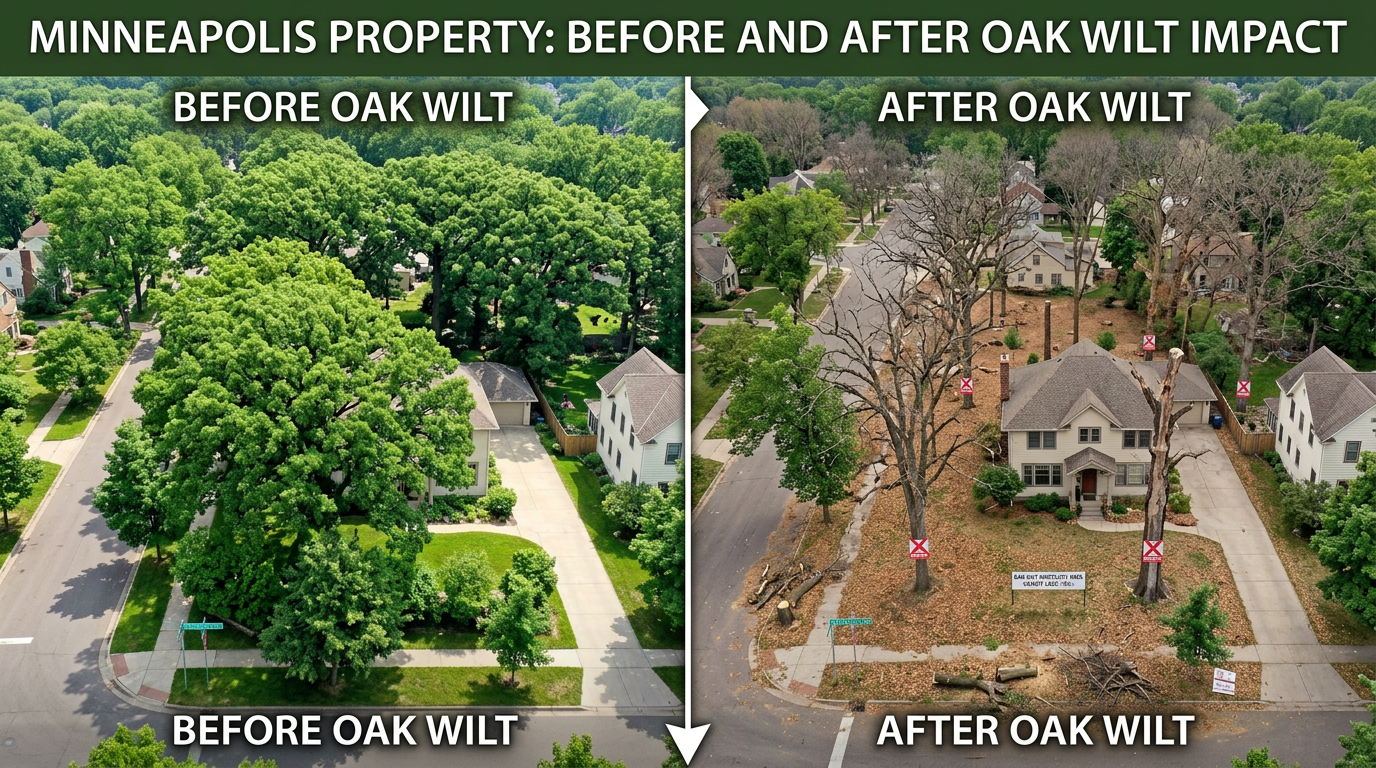
When tree disease treatment becomes necessary for Minneapolis properties, swift professional intervention offers the best chance of saving valuable trees and preventing disease spread to neighboring oaks. Treatment success depends heavily on early detection, proper diagnosis, and implementation of appropriate management strategies tailored to local conditions.
Fungicide injection therapy using propiconazole has shown effectiveness in treating oak wilt, particularly when applied preventively to high-value trees or therapeutically in early infection stages. This systemic treatment requires specialized equipment and training to ensure proper dosage and application timing. In Minneapolis’s climate, injections are typically most effective when performed during the active growing season, allowing the fungicide to distribute throughout the tree’s vascular system before winter dormancy.
Root barrier construction becomes a critical treatment component when the disease is confirmed on Minneapolis properties with multiple oak trees. Professional installation of trench barriers involves careful excavation to sever root grafts between infected and healthy trees, typically extending 100 feet beyond the infected tree in all directions where healthy oaks are present. This intensive process requires understanding of Minneapolis soil conditions, utility locations, and proper timing to minimize stress on healthy trees.
Infected tree removal must be conducted with extreme care to prevent further disease spread. Professional arborists experienced with protocols ensure that infected trees are removed during dormant seasons when possible, with immediate disposal or treatment of all wood materials. The removal process includes proper sanitization of equipment between trees and careful handling of wood chips and debris that could harbor fungal spores.
Monitoring and follow-up care extends for several years after initial treatment, as oak wilt can remain dormant in root systems before manifesting symptoms. Regular assessments by ISA Certified Arborists help Minneapolis property owners track treatment effectiveness and detect any new infections early enough for successful intervention.
Choosing Professional Oak Wilt Management in Minneapolis
Protecting Minneapolis’s valuable oak trees from this devastating disease requires the expertise of qualified professionals who understand both the technical aspects of disease management and the specific challenges facing our urban forest. The complexity of diagnosis, treatment, and prevention makes professional involvement essential for Minneapolis property owners.
ISA Certified Arborists possess the specialized training necessary to accurately diagnose symptoms, distinguish them from other tree health problems common in Minneapolis, and develop appropriate management strategies. This certification ensures familiarity with current research, treatment protocols, and safety standards essential for effective management. Additionally, certified arborists understand the critical timing requirements for oak tree care in areas where the disease is present, helping prevent inadvertent transmission through improper pruning timing.
Proper equipment and techniques for management require significant investment and specialized training. Professional tree care companies maintain the specialized injection equipment, trenching tools, and safety gear necessary for effective treatment implementation. They also carry appropriate insurance coverage for the high-risk activities involved in disease management, protecting property owners from liability concerns.
Local experience with Minneapolis conditions proves invaluable when developing management strategies. Professionals familiar with Hennepin County’s confirmed presence, local soil conditions, and common tree species can provide more effective recommendations than generic approaches. Understanding Minneapolis’s urban forest dynamics, from the mature oak groves in Minnehaha Park to the boulevard trees throughout residential neighborhoods, enables more targeted and successful intervention strategies.
Total Tree Care’s team combines ISA Certified Arborist credentials with extensive experience managing oak wilt throughout Minneapolis, St. Paul, Richfield, Bloomington, and surrounding communities. Our comprehensive approach addresses both immediate treatment needs and long-term forest health management, helping preserve the urban canopy that makes Minneapolis neighborhoods so distinctive.
Oak wilt represents a serious threat to Minneapolis’s urban forest, but with proper prevention strategies, early detection, and professional management, we can protect these valuable trees for future generations. The key lies in understanding the disease’s transmission patterns, respecting critical timing requirements for oak tree care, and working with qualified professionals who bring both technical expertise and local experience to management.
As ISA Certified Arborists serving the Minneapolis metro area, Total Tree Care is committed to helping property owners navigate the challenges of prevention and treatment. Our team understands the unique conditions facing Minneapolis oak trees and provides comprehensive services from routine preventive care to emergency disease management.
Don’t wait until symptoms appear—proactive management is always more effective and less costly than reactive treatment. Contact Total Tree Care today for a professional oak tree assessment and customized management plan that protects your valuable trees while preserving Minneapolis’s urban canopy. Call us (651) 318-4480 for your free consultation and learn how proper oak tree care can safeguard your property’s most valuable natural assets.
Total Tree Care - ISA Certified Arborists serving Minneapolis, St. Paul, Richfield, Bloomington, and surrounding communities. Professional tree care you can trust.
