Storm Damage Tree Cleanup in St. Paul: Fast, Safe Response
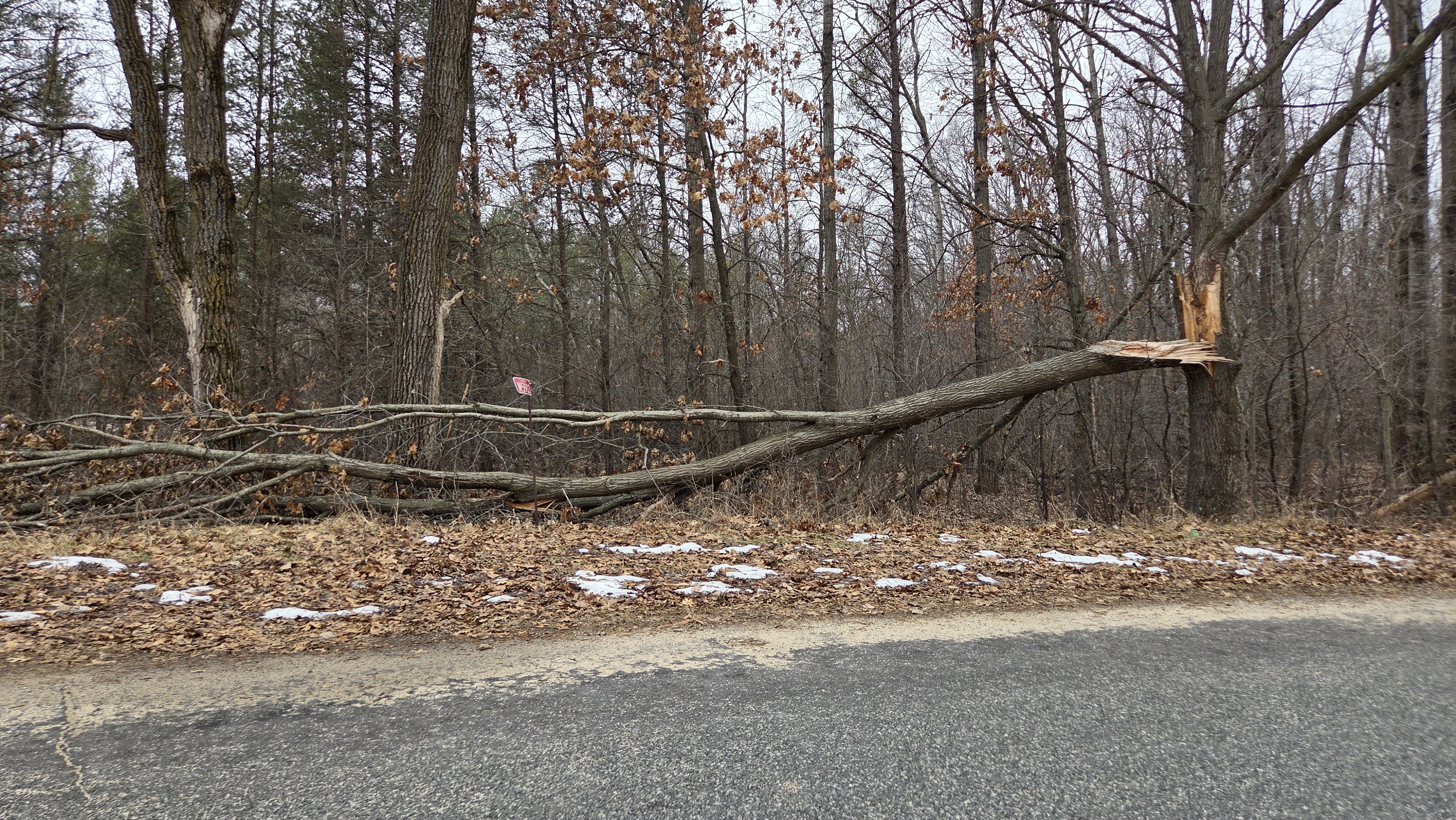
Storm damaged tree situations require systematic evaluation that goes beyond obvious visible damage. Minnesota’s freeze-thaw cycles weaken tree structures throughout winter, making them vulnerable to failure during spring and summer storms. When assessing damage priorities, our certified arborists evaluate three critical factors: immediate safety hazards, structural integrity, and salvage potential.
The first priority involves identifying trees or large branches posing immediate threats to people, structures, or utilities. In St. Paul’s dense urban environment, a tree on house situation or tree blocking road access requires immediate professional intervention. These emergencies demand specialized equipment and safety protocols that only qualified professionals should attempt.
Secondary assessment focuses on wind damaged tree situations with compromised structural integrity. The mature oak and maple populations throughout Ramsey County can appear stable after initial storm damage while harboring dangerous internal fractures or root system compromise. Our TRAQ-qualified arborists use specialized techniques to identify these hidden hazards and prioritize removal or stabilization efforts.
Many storm situations allow for partial tree salvage through proper pruning and care. Trees that lose major limbs but retain sound trunk structure often recover successfully when treated correctly. This approach is particularly valuable in St. Paul’s established neighborhoods where mature trees significantly contribute to property values and community character.
Why St. Paul Trees Face Unique Storm Vulnerabilities
St. Paul’s location at the confluence of the Mississippi and Minnesota rivers creates specific conditions that influence tree failure patterns during severe weather. River valleys channel and intensify wind speeds, while temperature variations between water and land surfaces contribute to rapid storm development. These geographic factors, combined with the city’s mature urban forest, create distinct challenges for storm response.
The predominant tree species in St. Paul neighborhoods respond differently to storm stress. American elms that survived Dutch elm disease along Summit Avenue demonstrate strong wind resistance, but ice accumulation can cause catastrophic broken branches. Native oaks throughout Highland Park and Macalester-Groveland show excellent storm tolerance when healthy, but emerald ash borer damage has weakened many ash trees to dangerous levels.
Urban soil compaction and construction damage compound storm vulnerability throughout St. Paul’s residential areas. Trees growing in restricted root zones lack the anchoring strength to withstand severe weather, often resulting in uprooted tree situations. This problem is particularly evident in older neighborhoods where decades of street improvements and utility installations have compromised root systems.
Storm timing relative to seasonal tree physiology also affects damage patterns in Minnesota. Late spring storms catch trees in full leaf before wood has hardened, creating maximum wind resistance and failure potential. Ice storms during dormant periods accumulate massive weight loads that exceed even healthy branch capacity.
Professional Emergency Tree Service Response Process
When emergency tree removal becomes necessary, proper response protocols ensure safety while minimizing additional property damage. Total Tree Care’s emergency response begins with rapid site assessment to identify immediate hazards and establish safe work zones. This evaluation determines whether utility companies, emergency services, or municipal authorities need coordination before work proceeds.
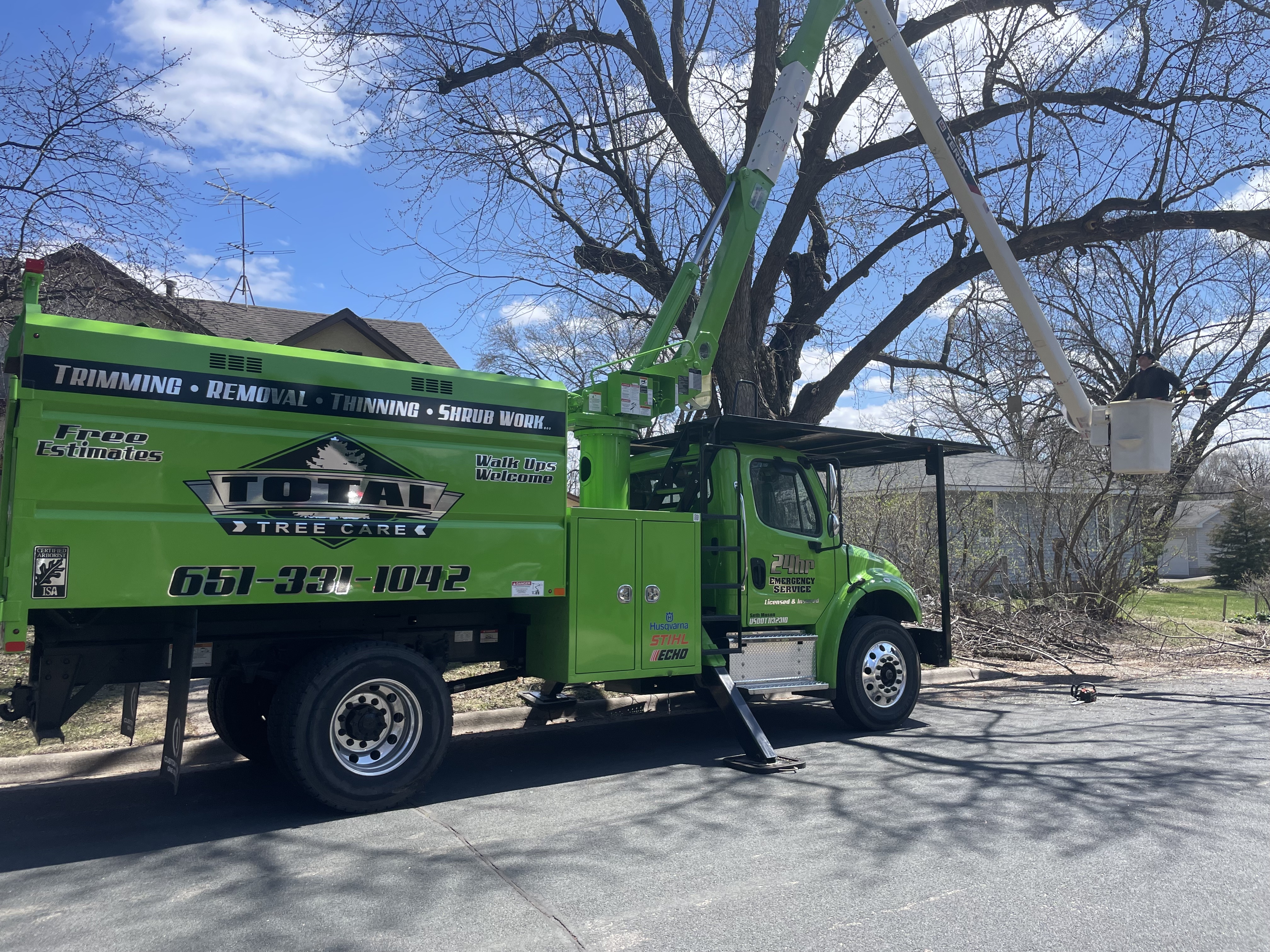
Urgent tree removal situations require specialized equipment not used in routine tree care. Aerial lifts provide safe access to trees resting on structures, while crane systems lift heavy sections without causing additional damage. Traffic control equipment becomes essential when emergency situations affect public safety and access.
The removal sequence for emergency situations follows established safety protocols that prioritize worker and public safety. Tension and compression forces in storm damage tree situations create unpredictable failure patterns requiring careful analysis before each cut. Professional arborists use rigging techniques to control piece removal and prevent secondary damage to surrounding property.
Documentation during emergency response serves multiple purposes beyond immediate cleanup. Insurance claims require detailed assessment of damage causes and removal necessity. Municipal permits may be required for significant tree removal, even in emergency situations. Proper documentation helps property owners understand what happened and how to prevent similar damage.
Recognizing When Professional Intervention Is Required
Identifying emergency situations that require professional attention prevents injuries and additional property damage. Obvious signs include major limbs or trunks resting on structures, leaning tree after storm conditions with exposed roots, and trees entangled in power lines. These situations always demand immediate professional assessment and removal.
Subtle indicators of internal damage may not be immediately obvious to property owners. Bark splits, unusual lean angles, and soil mounding around tree bases indicate root system failure that makes trees extremely hazardous. Crown asymmetry or sudden gaps in the canopy often reveal major structural damage requiring professional evaluation.
Partial root failure situations present particular challenges in St. Paul’s clay soils. Trees may remain standing but become structurally compromised, while complete uprooting creates immediate hazards from both the fallen tree and exposed root ball. These conditions require careful assessment of soil conditions and remaining root structure.
The interconnected nature of St. Paul’s mature tree canopy means damage to one tree can affect neighboring tree stability. Removal of a large tree can suddenly expose previously protected trees to wind loads they cannot handle. Professional arborists evaluate these relationships and recommend preventive measures to avoid cascading failures.
Selecting Qualified Storm Damage Professionals
Choosing qualified professionals for emergency situations requires verification of proper credentials, insurance, and equipment capabilities. ISA Certified Arborists possess the technical knowledge to assess complex damage situations and implement safe removal procedures. TRAQ qualification specifically addresses hazard tree evaluation, making it particularly valuable for storm damage assessment.
Insurance verification becomes critical during emergencies when property damage risks are elevated. Legitimate tree care companies carry comprehensive general liability and workers’ compensation coverage protecting property owners from additional liability. This protection is especially important when working near structures, utilities, or in public spaces.
Equipment capabilities directly affect both safety and efficiency during emergency operations. Professional companies maintain specialized equipment including aerial lifts, cranes, and rigging systems necessary for safe emergency work. Adequate equipment also includes traffic control devices, lighting for night work, and debris removal capacity.
Local knowledge and established relationships with utility companies, municipal authorities, and insurance providers streamline emergency response in St. Paul. Companies familiar with city permit requirements, utility protocols, and neighborhood characteristics navigate complex emergency situations more effectively than out-of-area contractors.
Post-Storm Recovery and Urban Forest Protection
Storm damage cleanup presents opportunities to improve long-term tree health and community resilience throughout St. Paul’s neighborhoods. Proper species selection for replacement trees addresses climate adaptation while maintaining the character that makes areas like Crocus Hill and Merriam Park distinctive. Native species like bur oak and basswood offer excellent storm resistance while supporting local wildlife.
Post-storm care for surviving trees often determines their long-term viability and contribution to the urban canopy. Professional pruning to remove damaged wood and restore proper structure helps trees recover from storm stress. Soil improvement and root zone protection address underlying vulnerabilities that contributed to initial damage.
Community-wide planning for storm resilience involves diversifying tree species, improving maintenance practices, and establishing emergency response protocols. St. Paul’s municipal forestry program provides excellent resources for property owners seeking to rebuild and improve their landscapes after storm events.
When severe weather threatens your trees or emergency situations arise, don’t risk safety or additional property damage with inadequate response. Total Tree Care’s ISA Certified Arborists bring decades of experience responding to emergency tree service calls throughout St. Paul, Minneapolis, Bloomington, Richfield, Rosemount, Hastings, and Farmington.
Our 24/7 availability, specialized equipment, and deep knowledge of local tree species and growing conditions make us your trusted partner for storm damage response and recovery. We coordinate with utility companies and emergency services to ensure safe, efficient resolution of even the most complex situations.
Contact Total Tree Care immediately for emergency storm damage response at (651) 331-1042 or visit totaltreecaremn.com. Our rapid response capabilities and comprehensive insurance coverage provide the peace of mind you need during stressful emergency situations.
