Structural Pruning for Young Trees: A Rosemount Homeowner’s Guide
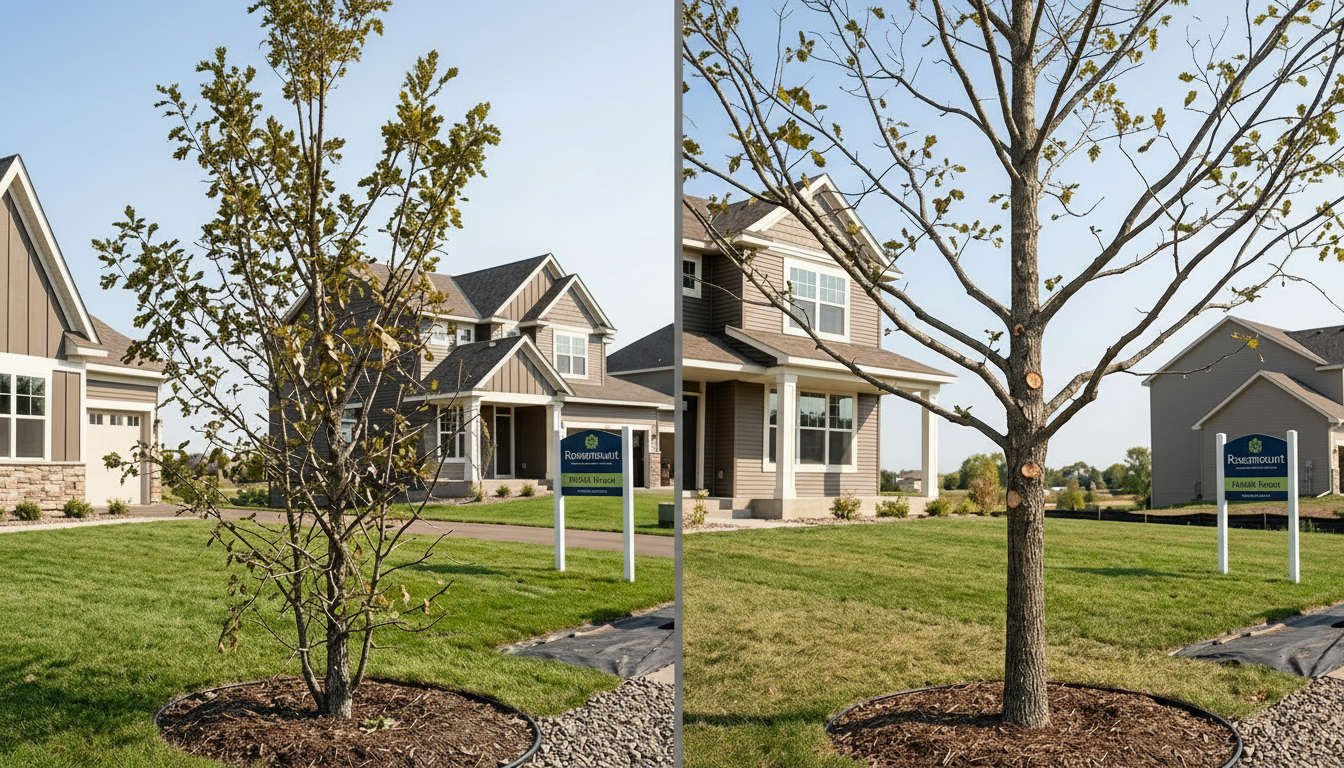
Rosemount’s rapid suburban expansion has brought thousands of newly planted trees to Dakota County developments, but without proper early training, these saplings face an uncertain future. The harsh Minnesota winters and freeze-thaw cycles that characterize our humid continental climate make structural pruning essential for young tree establishment. As homeowners in neighborhoods throughout this growing southern suburb invest in their landscapes, understanding proper young tree care becomes crucial for long-term success.
Tree pruning during a tree’s formative years—typically the first 5-7 years after planting—shapes its entire structural future. Total Tree Care’s ISA Certified Arborists have witnessed firsthand how proper early intervention prevents the expensive removals and major corrective work that plague improperly trained trees throughout the Minneapolis-St. Paul metro area.
This comprehensive guide will help Rosemount homeowners understand why structural pruning matters, when to implement training cuts, and how to recognize quality professional work that follows ANSI A300 standards.
Understanding Structural Pruning: Building Strong Tree Architecture
Structural pruning focuses on developing a strong central leader and well-spaced scaffold branches that can withstand Minnesota’s challenging weather conditions. Unlike mature tree maintenance, this specialized pruning technique emphasizes training rather than reduction, establishing the framework that will support decades of healthy growth.
The process begins with identifying the dominant central leader—the main upward-growing stem that should extend from the trunk’s apex. Young trees often develop competing leaders or codominant stems that create weak attachment points. These structural flaws become particularly problematic during Rosemount’s ice storms and heavy snow loads, when the weight can split poorly attached branches and cause catastrophic failure.
Crown cleaning during the structural phase involves removing dead, diseased, or damaged wood while preserving the tree’s natural form. However, the primary focus remains on spacing scaffold branches—the main horizontal limbs that form the tree’s permanent framework. Proper scaffold selection ensures branches emerge from the trunk at different heights and radiate in various directions, preventing overcrowding and weak attachments.
Minnesota’s native species like red oak, sugar maple, and basswood respond exceptionally well to early structural training. These trees naturally develop strong central leaders when properly guided, creating the robust architecture needed to thrive in our climate zone’s temperature extremes and seasonal storms.
Why Rosemount’s New Developments Require Special Tree Training Attention
The suburban boom transforming Rosemount’s landscape presents unique challenges for newly planted trees that established neighborhoods don’t face. Construction activities compact soil, alter drainage patterns, and create microclimates that stress young trees during their critical establishment period. Professional pruning becomes essential to help these trees overcome transplant shock and develop resilient structure.
New development trees often arrive from nurseries with poor structure already established—multiple leaders, poorly spaced branches, or included bark formations that create future hazards. The sooner homeowners address these issues through structural pruning, the less invasive and expensive corrections become. Waiting until trees reach maturity means major cuts that compromise health and create decay entry points.
Rosemount’s slightly later spring compared to Minneapolis proper affects pruning timing for young trees. The extended dormant season provides an excellent window for dormant season pruning, allowing cuts to heal before the growing season’s energy demands begin. This timing proves particularly important for oak species, which must avoid warm-weather pruning to prevent oak wilt transmission—a serious concern throughout Dakota County.
The freeze-thaw cycles characteristic of our region create additional stress on poorly structured young trees. Branches with weak attachments or included bark can fail during temperature fluctuations, while properly trained trees with strong scaffold systems weather these conditions successfully. Early intervention through crown pruning establishes the structural integrity needed for long-term survival.
The Structural Pruning Process: What Rosemount Homeowners Should Expect
Professional tree branch pruning for structural development follows a systematic approach that prioritizes long-term tree health over immediate aesthetic concerns. The process begins with careful assessment of the tree’s current structure, identifying the strongest central leader and evaluating existing branch attachments for strength and spacing.
The first priority involves establishing or maintaining a single dominant leader. When multiple leaders compete for dominance, the weaker stems require removal or subordination through selective pruning cuts. This process, called leader selection, prevents the formation of co-dominant stems that create structural weakness. ISA Certified Arborists make these cuts just outside the branch collar, following ANSI A300 standards to promote proper healing.
Scaffold branch selection follows specific spacing guidelines that vary by species but generally require 12-18 inches of vertical separation between major limbs. Crown thinning during this phase removes competing branches while preserving those with the strongest attachments and best positioning. The goal involves creating a framework where no single branch exceeds one-third the diameter of the trunk at its point of attachment.
Timing proves critical for structural pruning success in Minnesota’s climate. Late fall through early spring provides the optimal window for most deciduous species, when trees remain dormant and energy reserves focus on root development rather than wound closure. However, dead or hazardous branches require immediate removal regardless of season, and spring-flowering trees like crabapples need post-bloom pruning to preserve next year’s flower production.
Recognizing When Your Young Trees Need Professional Structural Training
Homeowners in Rosemount’s developing neighborhoods should monitor their young trees for specific structural issues that indicate the need for professional tree pruning. Multiple leaders competing for dominance represent the most common and serious problem, creating weak points that will fail under snow and ice loads typical of Minnesota winters.
Crossing or rubbing branches require immediate attention, as the constant friction creates wounds that invite disease and pest problems. These issues become particularly problematic during our region’s emerald ash borer concerns, where any wound can provide entry points for secondary infections that weaken already stressed trees.
Branch spacing problems manifest as clusters of limbs emerging from similar trunk heights, creating overcrowded areas that compete for light and nutrients. Proper structural pruning addresses these issues while trees remain small enough for easy correction. Waiting until branches reach significant size means larger wounds and greater stress on the tree’s energy reserves.
Included bark formations—where bark becomes trapped between branch and trunk—create particularly dangerous weak points that often fail without warning. These structural flaws appear as tight V-shaped crotches rather than the strong U-shaped attachments characteristic of properly attached branches. Professional assessment can identify these problems before they become hazardous.
Choosing Professional Tree Care in Rosemount: Credentials and Standards Matter
Selecting qualified professionals for young tree care requires understanding the credentials and standards that ensure proper work. ISA Certified Arborists possess the technical knowledge needed to make appropriate pruning decisions that promote long-term tree health rather than short-term appearance improvements.
ANSI A300 pruning standards provide the technical framework for professional tree care, specifying cut placement, timing, and techniques that promote proper healing and structural development. These standards become particularly important for structural pruning, where improper cuts can create permanent weaknesses that compromise tree safety throughout its lifespan.
Insurance and licensing requirements protect homeowners from liability while ensuring professionals maintain appropriate safety standards. Tree work involves significant risks, particularly when working around power lines or using specialized equipment like aerial lifts and chainsaws. Proper credentials indicate commitment to safety and professionalism.
Local knowledge proves invaluable for tree care in Minnesota’s challenging climate. Professionals familiar with regional species, pest concerns like emerald ash borer, and weather patterns can make informed decisions about timing, techniques, and species-specific requirements that out-of-area contractors might miss.
Common Structural Problems in Rosemount’s Young Tree Population
New developments throughout Rosemount often feature fast-growing species like silver maple, green ash, and hybrid poplars that require careful structural guidance. These trees can develop significant structural issues within just a few years if left unpruned, creating safety hazards and reducing their lifespan considerably.
Co-dominant stems represent the most frequent problem in young trees, where two or more leaders of similar size compete for dominance. This creates a weak union that’s prone to splitting during storms. The solution involves selecting the strongest, most centrally located leader and removing or subordinating the others through proper pruning techniques.
Temporary branches often confuse homeowners who mistake them for permanent scaffold limbs. These lower branches serve important functions during establishment—providing energy through photosynthesis and protecting the trunk from sun scald. However, they require gradual removal as the tree matures to prevent large wounds and maintain proper clearance.
Water sprouts and suckers commonly develop on young trees stressed by transplanting or environmental conditions. These rapidly growing shoots drain energy from the main structure and create cluttered, weak growth patterns. Regular removal through crown cleaning maintains the tree’s energy focus on developing strong permanent structure.
The Economics of Early Tree Training in Rosemount
Investing in structural pruning for young trees provides exceptional returns compared to corrective work on mature specimens. A typical structural pruning session for a young tree costs a fraction of major corrective work or removal that becomes necessary when structural problems go unaddressed.
Property values in Rosemount’s developing neighborhoods benefit significantly from well-maintained tree populations. Mature trees with good structure can add thousands of dollars to property values while providing energy savings through strategic shading and windbreak effects. Conversely, hazardous trees with poor structure become liabilities that reduce property appeal and create insurance concerns.
The long-term costs of neglecting young tree structure extend beyond the trees themselves. Poorly structured trees that fail during storms can damage homes, vehicles, and power lines, creating expensive repairs and potential liability issues. Proper early training virtually eliminates these risks by developing strong, resilient tree architecture.
Energy savings from properly structured shade trees become substantial over time. Trees trained to develop appropriate canopy spread and density can reduce cooling costs by 10-15% during Minnesota’s warm summers while providing windbreak protection during harsh winters.
Seasonal Considerations for Structural Pruning in Minnesota
Winter pruning provides the ideal window for most structural work in Rosemount’s climate. Dormant trees tolerate pruning stress better and heal more effectively when energy reserves focus on root development rather than leaf production. The absence of leaves also allows better visibility of branch structure and potential problems.
Spring considerations become critical for certain species and situations. Oak trees must avoid pruning during warm months to prevent oak wilt transmission, while spring-flowering trees like serviceberry and redbud require post-bloom pruning to preserve next year’s flower display. Emergency situations may require immediate attention regardless of season.
Summer limitations restrict structural pruning to essential safety work only. The combination of active growth, heat stress, and increased disease transmission risks makes summer an inappropriate time for elective structural work. However, storm damage or hazardous conditions may necessitate immediate intervention.
Fall preparation allows for final structural adjustments before winter weather arrives. This timing works well for species that benefit from late-season pruning and provides opportunity to address any storm damage from summer weather events.
Protecting Your Investment: Maintenance After Structural Pruning
Follow-up care proves essential for maximizing the benefits of structural pruning in young trees. Proper watering, mulching, and fertilization support the tree’s recovery and promote healthy growth that fills in the pruned canopy appropriately.
Monitoring growth allows early identification of new structural issues that may develop as the tree matures. Annual inspections by ISA Certified Arborists can catch problems while they remain easily correctable, maintaining the investment in proper structure.
Gradual training continues throughout the tree’s juvenile period, with periodic pruning sessions that refine structure and address new growth. This approach prevents the need for major corrective work while maintaining the tree’s health and appearance.
Documentation of pruning work helps track the tree’s development and guides future care decisions. Professional arborists maintain records of work performed, allowing for consistent long-term management that builds on previous structural improvements.
Structural pruning represents one of the most cost-effective investments homeowners can make in their landscape’s long-term value and safety. Young trees trained properly during their establishment years develop into the mature specimens that define neighborhood character and provide decades of benefits including energy savings, property value enhancement, and environmental services.
The alternative—neglecting early structural development—leads to expensive corrective work or premature removal of trees that could have thrived with proper care. Major structural corrections on mature trees often require removal of large limbs that create significant wounds and compromise tree health, while some structural problems become impossible to correct once established.
Total Tree Care’s ISA Certified Arborists understand the unique challenges facing Rosemount’s growing community and the importance of establishing strong tree populations in new developments. Our experience throughout Dakota County, Farmington, Hastings, and the southern metro area provides the local knowledge needed to help your young trees develop into the mature specimens that will define your neighborhood for generations.
Don’t wait until structural problems become expensive hazards. Contact Total Tree Care today to schedule a consultation for your young trees. Our professional assessment will identify opportunities for structural improvement and develop a pruning plan that ensures your landscape investment thrives in Minnesota’s challenging climate. Visit totaltreecaremn.com or call (651) 318-4480 to learn more about our comprehensive tree care services throughout Rosemount and the greater Minneapolis-St. Paul metro area.
