Tree Removal Near Power Lines in Minneapolis: Critical Safety Protocols
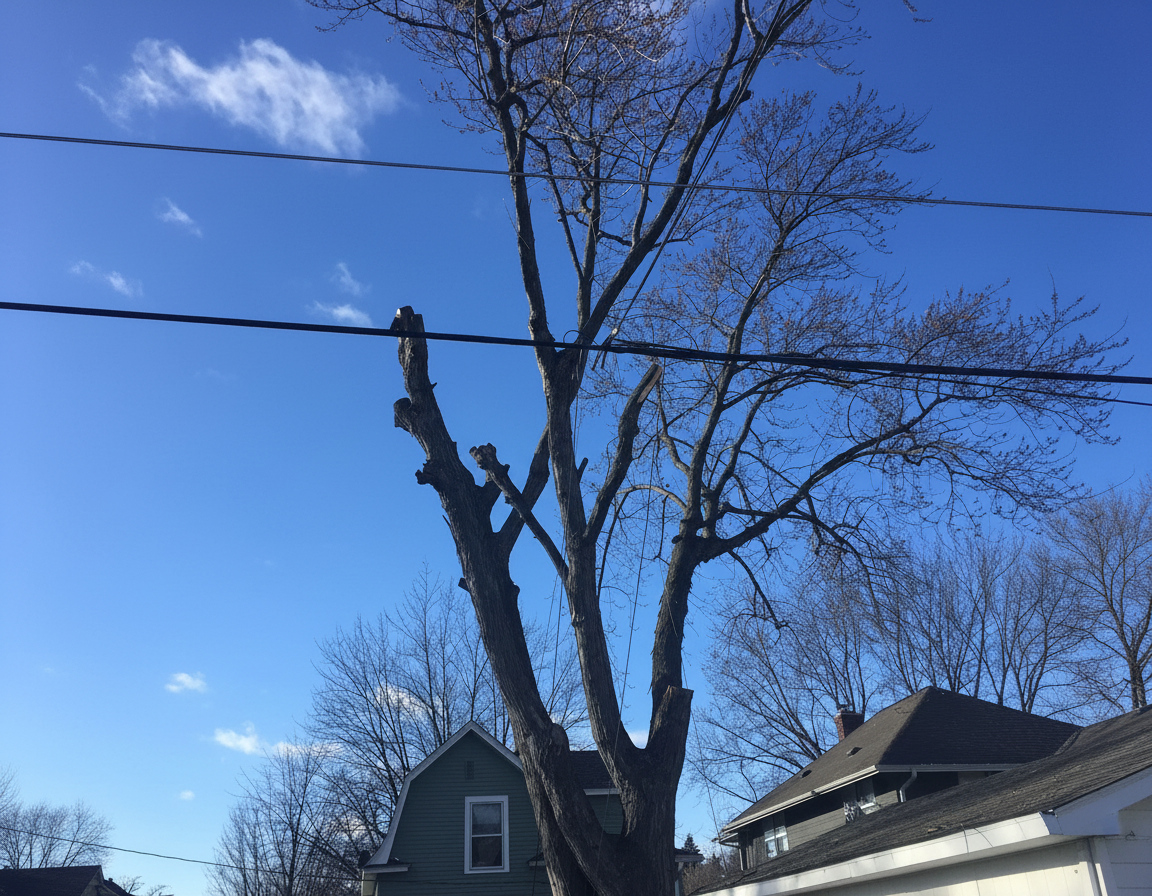
Electricity can arc through tree branches, creating deadly hazards even when trees aren’t directly touching power lines. According to OSHA 1910.269 standards, the minimum approach distance for unqualified workers is 10 feet from energized conductors—but this distance increases significantly based on voltage levels common in Minneapolis neighborhoods.
Primary distribution lines carrying 4,000 to 35,000 volts run throughout Minneapolis residential areas, while transmission lines near industrial corridors like those around the University of Minnesota carry up to 345,000 volts. Tree sap, moisture from Minnesota’s humid conditions, and even morning dew can conduct electricity, making seemingly “safe” situations potentially fatal.
Our utility-qualified arborists use specialized voltage detectors and maintain communication with Xcel Energy dispatchers before beginning any tree cutting near power lines. We understand that Minneapolis’s mature urban canopy—featuring large American elms, silver maples, and ash trees—often grows within the electrical hazard zone, requiring careful assessment of each situation.
Common Electrical Hazards in Minneapolis Tree Work
Arc flash potential from high-voltage distribution lines
Ground fault risks during wet Minnesota weather conditions
Secondary conductor contact when removing large tree sections
Equipment energization through tree branch contact
Why Minneapolis Trees Create Unique Power Line Challenges
Minneapolis’s dense urban forest and harsh weather patterns create frequent tree-utility conflicts that demand professional intervention. The city’s aggressive boulevard tree program has established magnificent mature canopies along residential streets, but many of these trees were planted decades before current utility clearance standards.
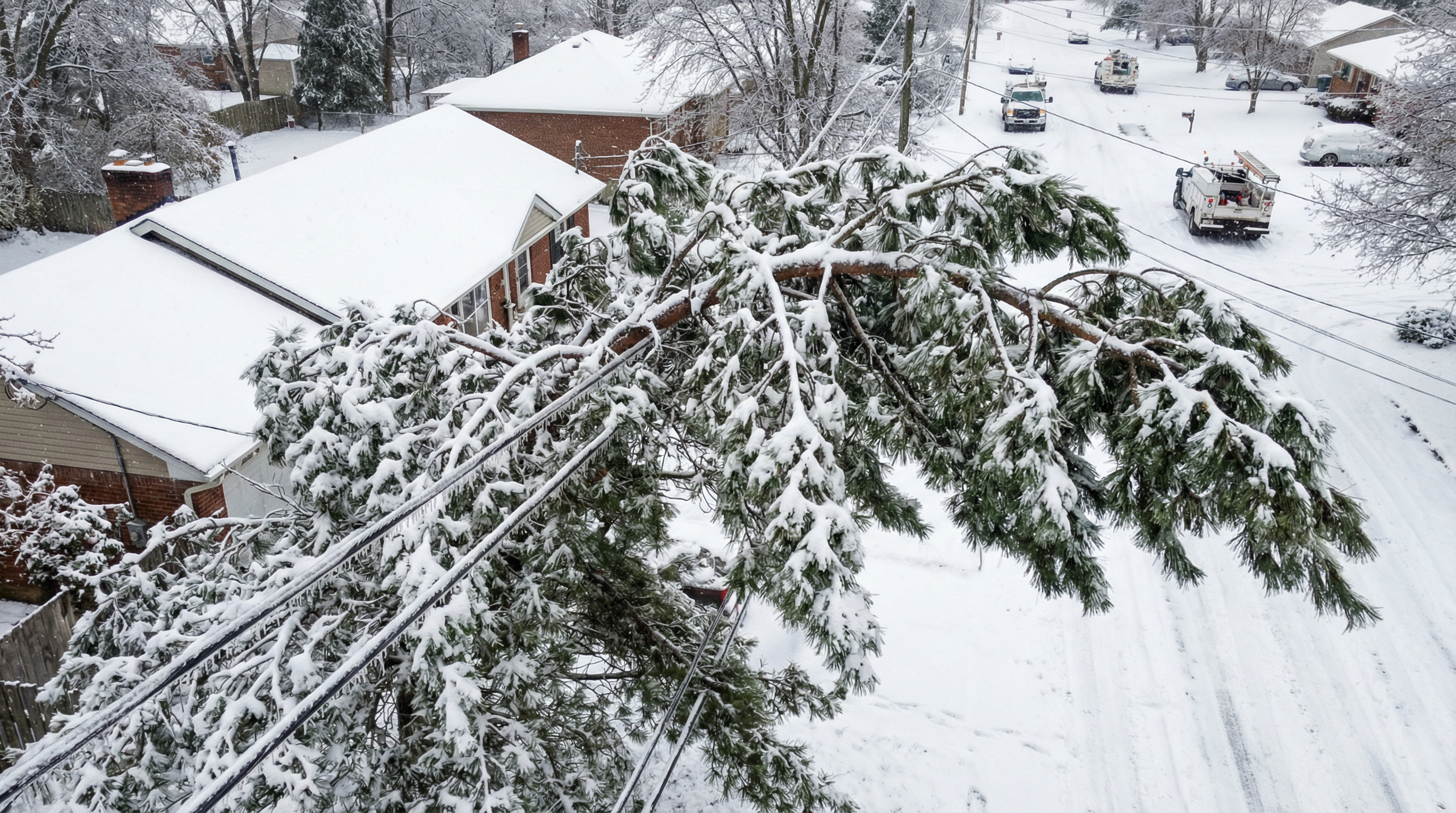
Our humid continental climate brings severe ice storms that load tree branches with heavy ice, causing them to sag into power lines or break entirely. Spring storms with straight-line winds exceeding 60 mph regularly topple trees across power lines, while summer thunderstorms create emergency situations throughout neighborhoods from Uptown to Northeast Minneapolis.
Local Tree Species and Power Line Risks
The emerald ash borer epidemic has weakened thousands of ash trees throughout the metro area, making them more susceptible to failure during storms. Dead or dying ash trees near power lines pose extreme hazards because their brittle wood can break unpredictably during removal, potentially energizing equipment or creating secondary electrical contacts.
Minneapolis’s mature American elms—survivors of Dutch elm disease—often have extensive canopies that grow into utility corridors along major streets like Grand Avenue and Summit Avenue. These situations require specialized pruning techniques that maintain both tree health and electrical safety.
OSHA 10-Foot Rule and Professional Safety Protocols
The OSHA 10-foot rule is just the starting point for electrical safety in tree work—actual safe working distances vary significantly based on voltage levels and environmental conditions. For Minneapolis’s typical 13,200-volt distribution lines, qualified line clearance arborists must maintain minimum approach distances of 2 feet, but only while using insulated aerial lifts and specialized PPE.
Unqualified workers, including most general tree services, must stay at least 10 feet away from any energized conductor. This means homeowners cannot safely remove trees touching power lines themselves, and hiring unqualified contractors creates liability issues and life-threatening risks.
Professional Safety Equipment and Procedures
Our utility clearance specialists follow strict protocols including:
Pre-job briefings with utility dispatchers
Use of insulated aerial equipment rated for electrical work
Continuous monitoring of weather conditions affecting electrical hazards
Class 2 rubber insulating gloves rated for 17,000 volts
Insulated tools specifically designed for electrical hazard tree work
Before any cutting begins, we verify line status with Xcel Energy and establish communication protocols for emergency de-energization if needed. Our crews are trained to recognize signs of energized equipment and understand that even “dead” lines can become energized without warning during utility switching operations.
When to Call Utility Companies vs. Tree Services
If a tree is actively touching power lines or has caused a power outage, contact Xcel Energy immediately at 1-800-895-1999 rather than attempting removal yourself. Utility companies have primary responsibility for clearing trees that pose immediate electrical hazards and will coordinate with qualified line clearance contractors.
However, property owners are typically responsible for trees that are growing toward but not yet touching power lines. This is where Total Tree Care’s utility clearance expertise becomes essential. We can assess whether preventive pruning or removal is needed before trees create electrical hazards.
Understanding Responsibility for Different Situations
For trees near service drops (the lines running from utility poles to your house), the responsibility often depends on where the tree is located relative to the connection point. Our ISA Certified Arborist team can determine responsibility and coordinate with appropriate parties to ensure safe, compliant tree work.
In Minneapolis neighborhoods with mature canopies like Kenwood or Lowry Hill, proactive utility clearance prevents emergency situations during storms. We work with property owners to develop long-term management plans that maintain both tree health and electrical safety while complying with city forestry ordinances.
Choosing Qualified Electrical Hazard Tree Professionals
Not all tree services are qualified to work near power lines—this specialized work requires specific certifications, equipment, and utility company approval. When selecting a contractor for tree removal near power lines in Minneapolis, verify they hold current ISA Certified Arborist credentials and OSHA 1910.269 qualification.
Qualified contractors must carry specialized insurance coverage for electrical hazard work and maintain utility company approval for line clearance operations. Total Tree Care holds all required certifications and works directly with Xcel Energy to ensure safe, compliant tree removal near power lines throughout the Minneapolis metro area.
What to Look for in a Utility Clearance Contractor
Current ISA Certified Arborist credentials
OSHA 1910.269 electrical safety qualification
Specialized insurance for electrical hazard work
Utility company approval for line clearance
Insulated aerial equipment and proper PPE
Experience with local utility infrastructure
Our utility clearance specialists use insulated aerial lifts, maintain proper approach distances, and follow strict safety protocols developed through years of experience working in Minneapolis’s challenging urban forest environment. We understand local utility infrastructure, tree species characteristics, and weather patterns that affect electrical hazard tree work.
Additionally, we coordinate with Minneapolis Park and Recreation Board when boulevard trees are involved and ensure all work complies with city tree preservation ordinances while prioritizing electrical safety.
Emergency Tree Removal and Storm Response
Minneapolis’s severe weather patterns mean tree-power line emergencies can happen any time of year. Our emergency response team is available 24/7 to handle dangerous situations in Minneapolis, St. Paul, Richfield, Bloomington, Rosemount, Farmington, and Hastings.
During major storm events, we work closely with Xcel Energy and local emergency management to prioritize the most hazardous situations. Our crane removal capabilities allow us to safely handle large trees that have fallen across multiple power lines or created complex electrical hazards.
Tree removal near power lines demands specialized expertise that goes far beyond general tree care knowledge. The combination of Minneapolis’s mature urban forest, severe weather patterns, and complex utility infrastructure creates situations that only qualified utility arborists should handle.
At Total Tree Care, Seth Mason and our ISA Certified Arborist team have the training, equipment, and utility company relationships necessary to safely resolve tree-power line conflicts throughout Minneapolis and surrounding communities. We prioritize safety while protecting your property and maintaining Minneapolis’s valuable urban canopy.
Don’t risk electrocution or property damage by attempting DIY tree removal near power lines or hiring unqualified contractors. Contact Total Tree Care today for professional electrical hazard tree assessment and removal services. Our utility clearance specialists are available for emergency response and can provide free estimates for preventive tree work that keeps your property safe and compliant with electrical safety standards.
Ready to address dangerous trees near power lines safely? Call Total Tree Care at your local Minneapolis tree removal experts. Visit totaltreecaremn.com or contact us today for professional utility clearance services throughout the Twin Cities metro area.
