When to Remove vs. Save a Tree: A Richfield Decision Guide
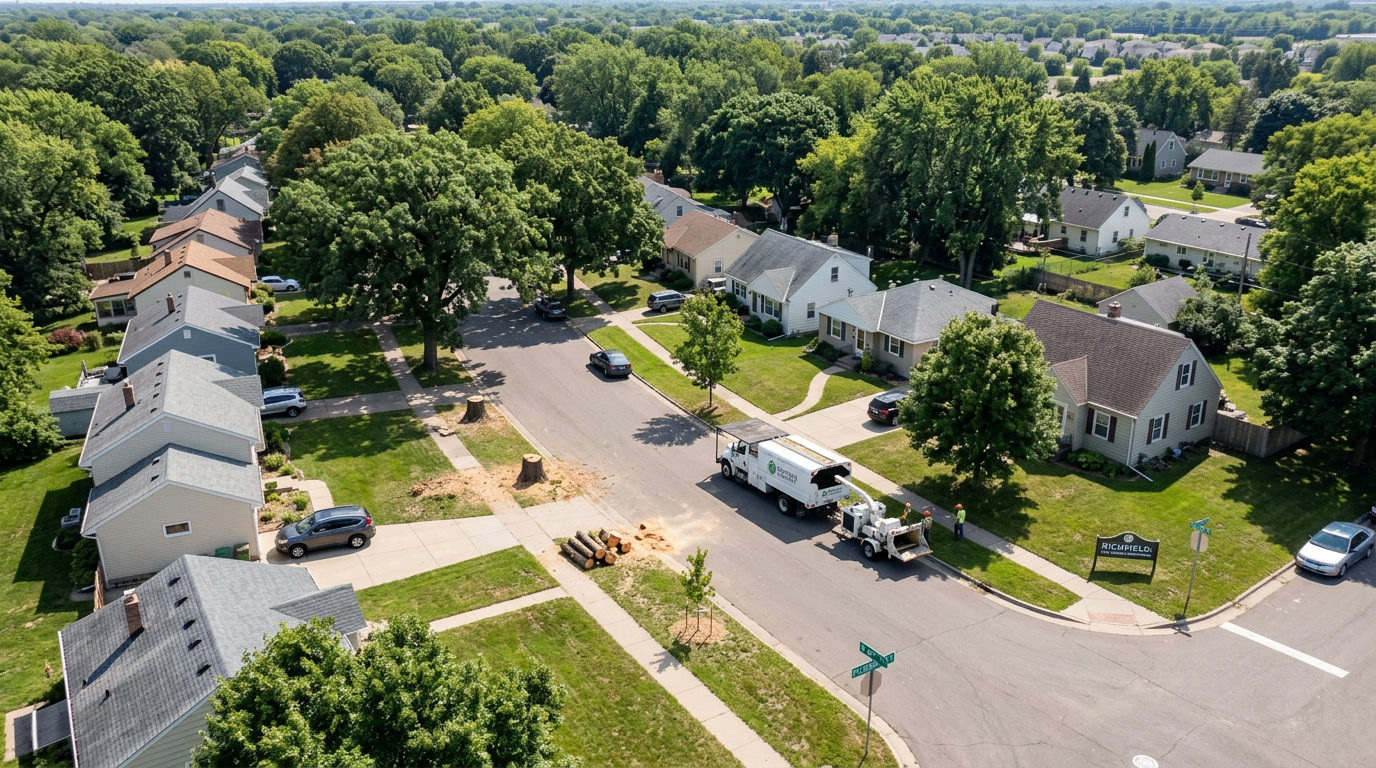
Tree health assessment goes far beyond checking leaves and bark. Professional arborists evaluate root system integrity, structural soundness, and species-specific vulnerabilities common to our harsh Minnesota climate. In Richfield, where many properties feature 50+ year old trees planted during the suburb’s development boom, understanding these assessment criteria becomes crucial.
A comprehensive evaluation examines crown density, leaf color and size, annual growth patterns, and overall tree structure. Healthy trees in our humid continental climate should show vigorous spring leaf emergence, consistent summer foliage, and proper seasonal color changes. Trees experiencing decline often display reduced leaf size, sparse canopy development, or premature fall coloration—especially noticeable along Richfield’s tree-lined residential streets.
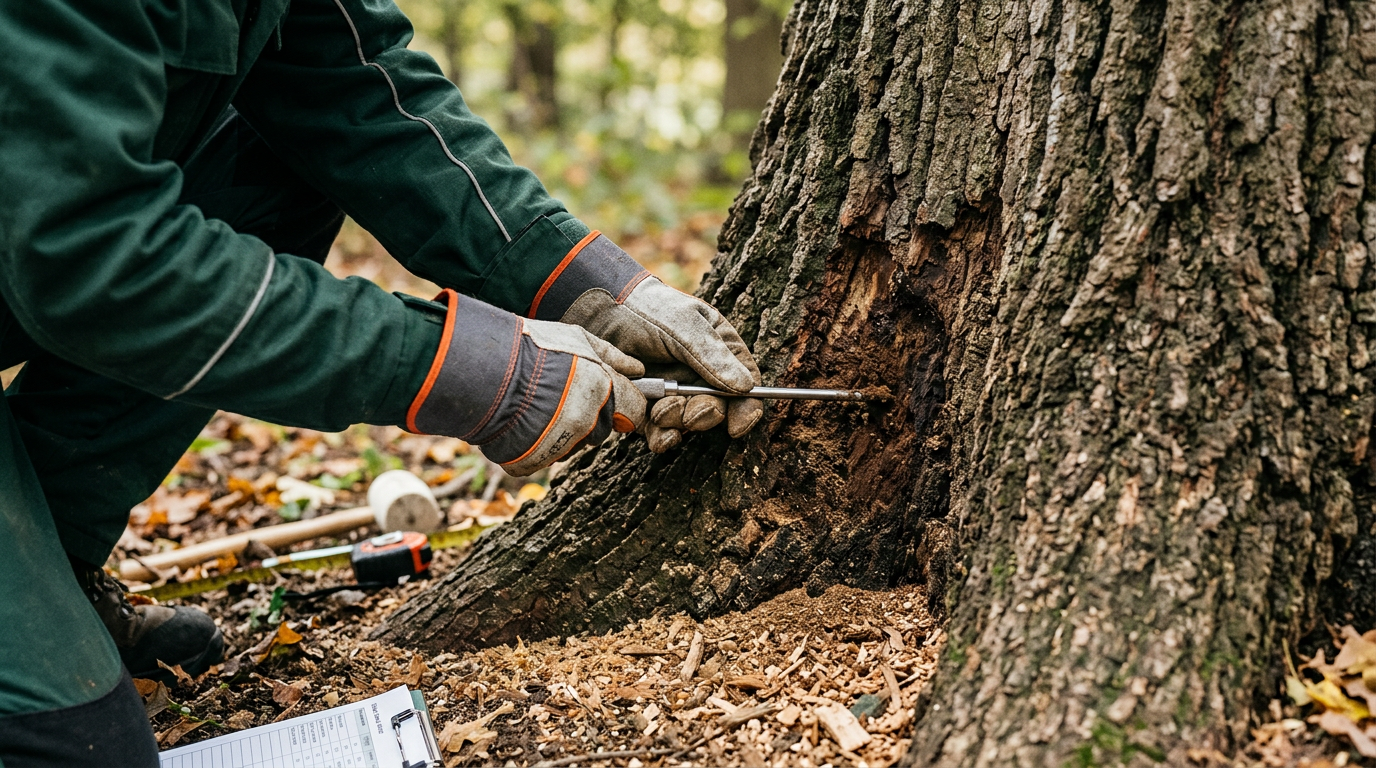
Root system assessment proves equally critical, particularly in Richfield’s heavy clay soils that become waterlogged during spring snowmelt. Root collar excavation may reveal girdling roots, decay, or construction damage that compromises stability. Our ISA Certified Arborists use specialized resistograph equipment to detect internal decay without damaging healthy tissue.
Species-specific considerations play a major role in health assessments. Richfield’s remaining ash trees require immediate evaluation for emerald ash borer symptoms, while the area’s mature bur oaks need assessment for oak wilt susceptibility. Each species presents unique indicators that trained arborists recognize during professional inspections.
Warning Signs Your Tree May Be Dying
Recognizing when a tree is dying requires understanding both obvious symptoms and subtle indicators suggesting irreversible decline. In Minnesota’s challenging climate, some symptoms may appear alarming but actually represent normal stress responses, while other seemingly minor issues indicate serious problems requiring immediate attention.
Crown and Branch Symptoms
Dead or dying branches throughout the crown often signal systemic problems, especially when affecting multiple areas rather than isolated limbs. Trees experiencing significant dieback typically show branch mortality starting from the crown top or outer edges. However, isolated dead branches—common after Richfield’s severe winter storms—may simply require pruning rather than complete tree removal.
Sparse foliage or leaves that appear smaller than normal indicate declining tree health. Trees losing leaves prematurely during summer months, particularly noticeable along 66th Street’s commercial corridor where trees face additional urban stress, often experience irreversible decline requiring professional evaluation.
Trunk and Bark Issues
Bark abnormalities provide crucial diagnostic information. Vertical cracks, missing bark sections, or fungal growth on the trunk often indicate internal decay or disease. In Richfield’s freeze-thaw climate, some bark splitting occurs naturally on species like maples and lindens, but extensive damage or rapid bark loss suggests serious decline.
Mushrooms or fungal brackets growing from the trunk base indicate advanced decay that typically cannot be reversed. These fungi feed on dead wood, signaling that internal structural integrity is compromised—a common issue in Richfield’s older trees that have endured decades of harsh winters.
Root System Problems
Root issues manifest through various above-ground symptoms including wilting during adequate moisture, stunted growth, or soil heaving around the tree base. Construction damage from Richfield’s ongoing infrastructure improvements can compromise root systems, leading to gradual decline over several seasons.
Lean development, especially after storms, may indicate root system failure. Trees showing sudden lean or soil cracking around the base require immediate professional assessment to determine if tree removal is necessary for safety.
When Tree Removal Becomes Necessary
Tree removal becomes the safest and most practical option when structural integrity is compromised beyond repair or when disease poses risks to surrounding trees. In Richfield, where mature trees often grow close to homes along narrow residential lots, safety considerations frequently drive removal decisions.
Structural Failure Risks
Structural failure risks increase dramatically when more than 50% of the trunk shows decay or when major root damage affects stability. Trees with significant lean—particularly those leaning toward structures or the busy corridors along Penn Avenue or Lyndale Avenue—may require removal even if otherwise healthy.
Our crane removal specialists handle high-risk situations safely, protecting surrounding property and Richfield’s well-maintained landscaping. This specialized equipment proves essential when removing large trees from the tight spaces typical of Richfield’s residential neighborhoods.
Disease and Pest Considerations
Disease considerations often mandate removal to prevent spread to healthy trees. Emerald ash borer-infested ash trees typically require removal once decline becomes apparent, as treatment success rates drop significantly after symptoms appear. Given EAB’s devastating impact on Richfield’s urban forest, prompt removal of infested trees helps protect remaining ash specimens.
Oak wilt infections also necessitate immediate removal and proper disposal to prevent root graft transmission to nearby oaks. This fungal disease spreads rapidly through Richfield’s interconnected oak root systems, making quick action essential for protecting neighborhood trees.
Safety and Liability Concerns
Dead tree removal should occur promptly to eliminate safety hazards and prevent pest infestations affecting healthy trees. Dead trees become increasingly unpredictable, with branch failure and complete tree failure risks escalating rapidly—particularly dangerous near Richfield’s schools and parks.
Emergency situations following severe storms often require immediate assessment and removal of damaged trees threatening structures or power lines. Our emergency tree removal services operate 24/7 to address storm damage throughout Richfield and surrounding communities.
Saving Trees: Treatment and Recovery Options
Many trees showing decline symptoms can recover with proper intervention, particularly when problems are identified early and addressed by qualified professionals. Tree stress from construction damage, soil compaction, or environmental factors often responds well to targeted treatments that restore vigor and extend useful life.
Structural Pruning Solutions
Structural pruning can address many safety concerns while preserving valuable trees. Removing dead, diseased, or structurally weak branches reduces failure risks while improving overall tree health. Crown reduction may be appropriate for trees that have outgrown their space or show signs of structural stress from wind loading.
Following ANSI A300 pruning standards, our certified arborists make precise cuts that promote healing and maintain tree structure. Proper pruning timing—particularly important for Richfield’s oaks to prevent oak wilt transmission—ensures treatments enhance rather than compromise tree health.
Soil and Root Treatments
Soil improvement treatments address many underlying health problems affecting Richfield trees. Deep root fertilization, soil decompaction, and drainage improvements can revitalize trees suffering from poor growing conditions common in urban environments.
Air spading techniques allow root collar excavation and soil replacement without damaging sensitive root systems. These treatments often produce dramatic improvements in tree health when performed by experienced arborists using proper techniques and timing.
Disease Management
Disease treatment options vary by pathogen and tree species. Fungicide applications may control certain diseases when applied preventively or during early infection stages. Systemic treatments can address some bacterial infections, though success rates vary significantly by disease type and infection severity.
Preventive treatments for emerald ash borer can protect valuable ash trees when applied before infestation occurs. However, treatment must continue every two years to maintain protection, making cost-benefit analysis important for treatment decisions.
Professional Tree Assessment Process
Professional tree health assessment involves systematic evaluation using industry-standard protocols and specialized equipment. Our ISA Certified Arborists follow established procedures to ensure accurate diagnosis and appropriate treatment recommendations based on current tree condition and long-term prognosis.
Comprehensive Evaluation
The assessment process begins with visual inspection of the entire tree, from root flare to crown tips. Arborists examine bark condition, branch structure, leaf characteristics, and overall tree architecture. Specialized tools including resistograph drilling and sonic tomography may be employed to assess internal conditions not visible during visual inspection.
Site evaluation considers soil conditions, drainage patterns, and environmental stresses specific to Richfield’s urban environment. Proximity to structures, utilities, and high-traffic areas influences risk assessment and treatment recommendations.
Documentation and Recommendations
Detailed condition reports include photographic evidence and specific recommendations for treatment or removal. Risk assessment considers the tree’s condition relative to nearby targets including homes, vehicles, and pedestrian areas along Richfield’s busy sidewalks and bike paths.
Treatment recommendations specify timing, methods, and expected outcomes for various intervention options. Cost estimates help property owners budget for recommended treatments or tree removal services, ensuring informed decision-making about tree management priorities.
Making the Right Decision for Your Richfield Property
Deciding between tree removal and preservation requires balancing safety, economics, and environmental considerations. Trees provide significant value through energy savings, property value enhancement, and environmental benefits, making preservation worthwhile when feasible.
However, safety must remain the primary consideration, especially for trees near structures or high-traffic areas. Professional assessment helps identify which trees pose unacceptable risks and which can be safely maintained through proper care.
Economic factors also influence decisions. When treatment costs exceed the tree’s value or when repeated interventions become necessary, removal may prove more cost-effective than ongoing management. Our arborists provide honest cost-benefit analyses to help guide these important decisions.
Making informed decisions about tree removal versus preservation requires professional expertise and understanding of local conditions affecting Richfield’s urban forest. The mature trees that define our neighborhoods deserve careful evaluation by qualified arborists who understand both tree biology and Minnesota’s unique climate challenges.
At Total Tree Care, our ISA Certified Arborists provide comprehensive tree assessments that consider safety, health, and economic factors in developing appropriate management recommendations. Whether your tree requires targeted treatment to restore health or safe removal to eliminate risks, we have the expertise and equipment to handle projects throughout Richfield, Bloomington, Minneapolis, and surrounding communities.
Our team understands the specific challenges facing trees in Richfield’s established neighborhoods, from emerald ash borer pressure to the impacts of harsh winter weather on mature specimens. We’ve helped hundreds of Richfield homeowners make confident decisions about their valuable tree investments.
Don’t wait until a declining tree becomes a safety hazard or until treatment options become limited. Contact Total Tree Care today at (651) 318-4480 for a professional tree assessment. We provide free estimates for all tree removal and treatment services, helping Richfield residents protect their properties and preserve their neighborhood’s beautiful tree canopy wherever possible.
