Winter Storm Tree Damage: Expert Tree Care Guide for St. Paul
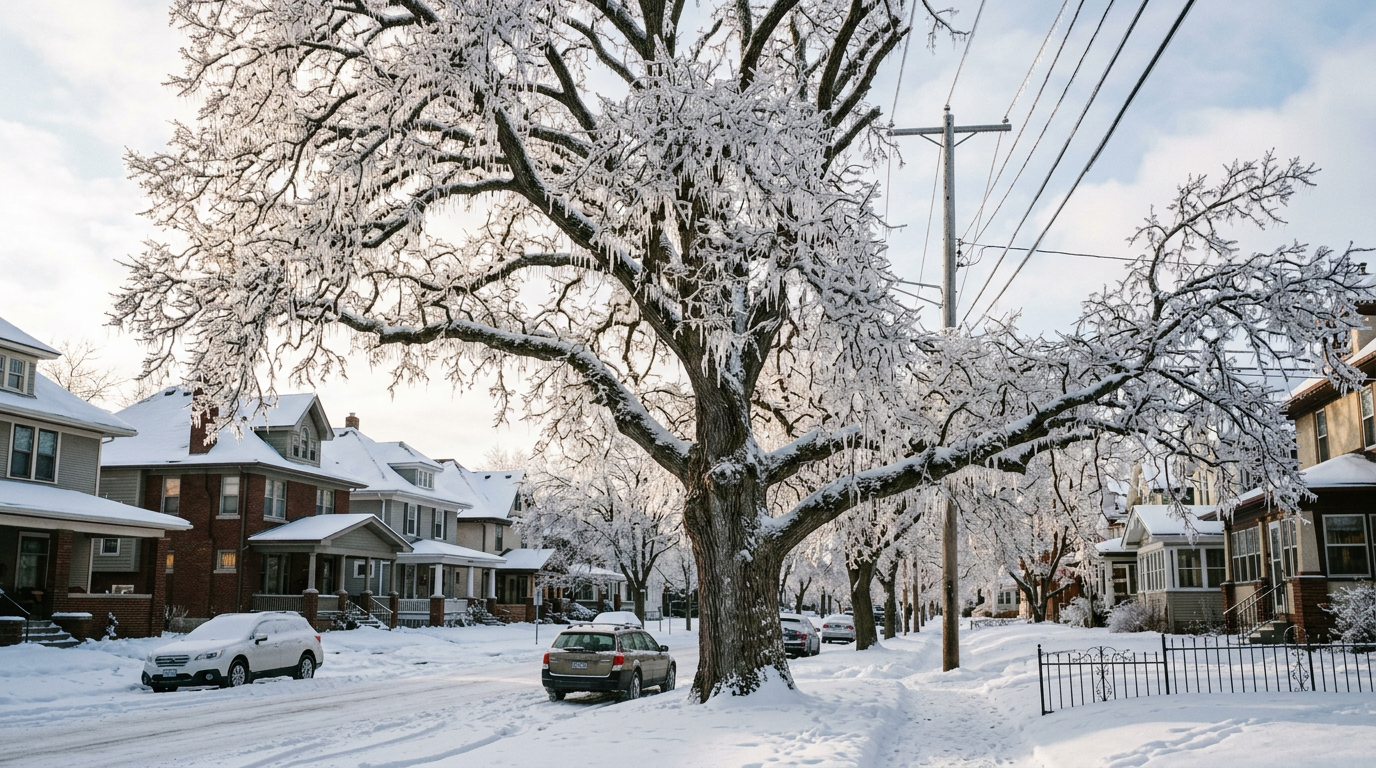
Ice loading represents the most serious winter threat to St. Paul trees. When freezing rain coats branches with ice, the additional weight can exceed a tree’s structural capacity. A half-inch ice accumulation can add 500 pounds to a large tree—enough to snap healthy branches or topple entire trees onto homes, vehicles, or power lines.
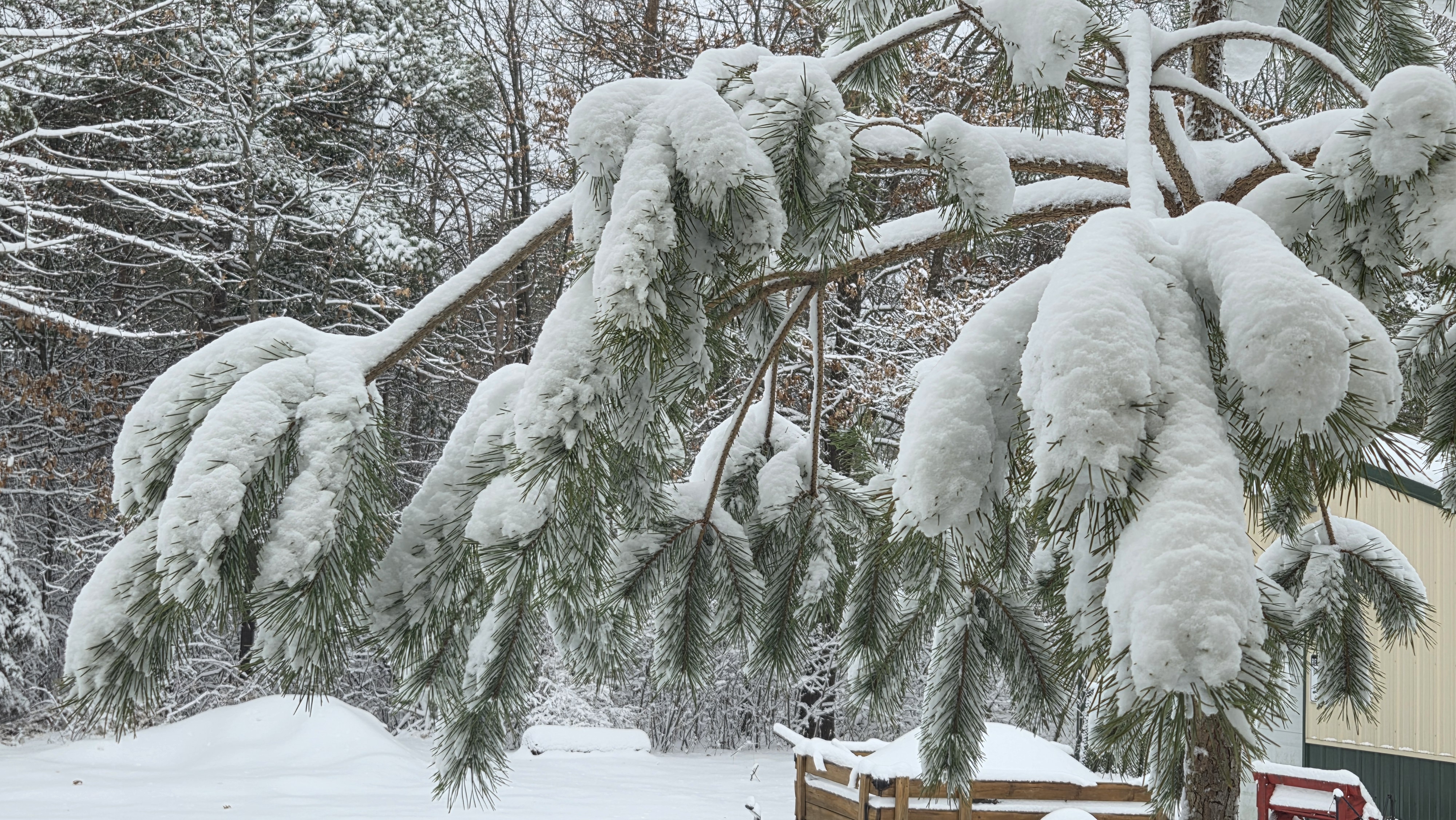
Snow loading affects trees differently depending on snow type and temperature. Wet, heavy snow that falls when temperatures hover near freezing creates maximum stress on branches. Evergreens like the Norway spruces common in St. Paul’s Macalester-Groveland neighborhood are particularly vulnerable because their needle-covered branches trap and hold snow more effectively than bare deciduous trees.
The freeze-thaw cycle that defines Minnesota winters creates additional stress on tree structures. Rapid temperature swings cause wood fibers to expand and contract, weakening branch attachments and creating internal cracks that may not become apparent until the next storm event. This phenomenon explains why seemingly healthy trees sometimes fail during relatively minor weather events.
Trees already compromised by emerald ash borer damage or Dutch elm disease—both significant concerns in St. Paul—face exponentially higher failure risk during winter storms. The extensive ash tree mortality throughout Ramsey County has left many properties with standing dead trees that become dangerous projectiles in high winds.
Why St. Paul Trees Face Unique Winter Challenges
St. Paul’s Zone 4a climate subjects trees to temperature extremes that test their physiological limits. Winter lows regularly reach -20°F or below, while spring can bring sudden warm spells followed by hard freezes. This climate stress makes trees more susceptible to winter storm tree damage than their counterparts in milder regions.
Our city’s mature urban forest presents unique challenges during winter storms. Many of St. Paul’s signature trees—the American elms on Summit Avenue, the oaks in Como Park—are 80-100 years old. While these mature specimens provide tremendous environmental and aesthetic value, their size and age make them more vulnerable to catastrophic failure during severe weather.
Urban heat island effects around downtown St. Paul and the State Capitol complex create microclimates where ice storms can be particularly destructive. Slightly warmer temperatures in these areas often mean the difference between snow (which trees can shed) and freezing rain (which accumulates as dangerous ice loading).
The Mississippi River corridor through St. Paul creates additional weather complexity. River valleys can channel winds and create temperature inversions that intensify ice formation on trees. Properties near the river, from the West Side to Lilydale, often experience more severe ice accumulation than areas just a few miles away.
Immediate Response to Winter Storm Tree Damage
Safety assessment must be your first priority after any winter storm. Never approach trees or branches touching power lines—assume all downed lines are energized and maintain at least 30 feet distance. Contact Xcel Energy immediately for any utility line involvement before attempting any cleanup.
Document damage thoroughly before beginning cleanup. Photograph all damage from multiple angles for insurance purposes. Focus on structural damage to your home, vehicles, or other property, as well as the failed tree or branches. This documentation proves essential for insurance claims and helps arborists assess the full scope of winter storm tree damage.
Prioritize hazard removal systematically. Address immediate threats first: branches hanging over walkways, driveways, or structures where they could fall and cause injury or additional damage. Trees or large branches leaning against your home require professional assessment—the apparent stability may be deceptive.
For minor branch cleanup, homeowners can safely remove small branches (under 2 inches diameter) from walkways and driveways using proper tools. However, any branch removal requiring a ladder or chainsaw should be left to professionals. Winter conditions make this work exponentially more dangerous for untrained individuals.
Professional assessment becomes critical when damage involves large branches, multiple failures, or trees showing signs of structural compromise. Our TRAQ-qualified arborists can evaluate whether damaged trees pose ongoing hazards and develop appropriate treatment plans.
Snow and Ice Management for Tree Protection
Gentle snow removal from evergreen branches can prevent breakage, but timing and technique matter critically. Remove snow within 24-48 hours of accumulation, before it has time to freeze solid or compact. Use an upward sweeping motion with a soft broom or your hands, working from branch tips toward the trunk.
Never shake or strike snow-loaded branches. Frozen branches become brittle and can snap easily under sudden force. Similarly, avoid using rakes, shovels, or other hard tools that can damage bark or break small branches. The goal is to reduce loading gradually, not to remove every flake of snow.
Ice removal should generally be left to natural melting. Unlike snow, ice bonds tightly to bark and branches. Attempting to chip or knock off ice typically causes more damage than the ice itself. Focus instead on protecting areas below ice-loaded trees from falling ice chunks as temperatures rise.
Strategic positioning of vehicles and outdoor furniture can minimize damage during ice storms. Move cars away from large trees, especially evergreens and trees with known structural issues. Cover sensitive plants or outdoor equipment that cannot be relocated.
Preventing Winter Storm Tree Damage Through Proper Tree Care
Proper pruning represents your most effective defense against winter storm tree damage. Late fall pruning removes dead, diseased, and structurally weak branches before they become projectiles. However, pruning must follow ANSI A300 standards—improper cuts can create new hazards rather than reducing them.
Crown thinning of dense evergreens can reduce snow and ice accumulation while maintaining the tree’s natural form. This technique removes selected interior branches to allow wind and precipitation to pass through the canopy rather than accumulating on branch surfaces.
Structural support systems may be appropriate for valuable mature trees with minor structural defects. Cabling and bracing, when properly installed by certified arborists, can help trees withstand storm loading that might otherwise cause failure.
Species selection for new plantings should consider winter storm resilience. Native Minnesota species like bur oak, basswood, and sugar maple generally withstand harsh winters better than non-native alternatives. Avoid brittle species like silver maple and Siberian elm in areas where storm damage could threaten structures.
When to Call Professional Tree Care Services
Immediate emergency response is warranted when trees or branches block roads, damage structures, or create imminent safety hazards. Total Tree Care provides 24/7 emergency tree removal service throughout St. Paul, Bloomington, Richfield, and surrounding communities, with rapid response capability and coordination with utility companies when power lines are involved.
Post-storm assessment by ISA Certified Arborists helps identify hidden damage that may not be immediately apparent. Stress cracks, loosened root systems, and compromised branch attachments often require professional evaluation to detect properly.
Insurance coordination becomes crucial for significant storm damage. Professional arborists can provide detailed damage assessments and repair estimates that insurance companies require for claim processing. We work directly with adjusters to ensure proper documentation and appropriate repair specifications.
Preventive maintenance scheduling should occur annually, ideally in late fall before winter weather arrives. Professional pruning, hazard assessment, and structural support installation provide the best protection against winter storm tree damage.
St. Paul’s winter weather will continue to challenge our urban forest, but proper preparation and professional response can minimize damage and protect your property investment. The city’s commitment to maintaining its historic tree canopy—from the nationally recognized Summit Avenue elms to the diverse species throughout Como Park—requires both municipal and private property owner vigilance.
Understanding the unique challenges facing trees in our climate zone helps homeowners make informed decisions about tree care and emergency response. Whether you’re dealing with the aftermath of an ice storm in Highland Park or preparing evergreens in Macalester-Groveland for the next winter weather event, professional guidance ensures both safety and tree health.
At Total Tree Care, our ISA Certified Arborists combine deep technical knowledge with extensive local experience serving St. Paul, Minneapolis, Hastings, Farmington, and throughout the Twin Cities metro. We understand how Minnesota’s harsh winters affect different tree species and can help you develop a comprehensive winter preparedness strategy.
Don’t wait for the next ice storm to threaten your trees and property. Contact Total Tree Care today for a comprehensive winter preparedness assessment. Our emergency response team stands ready 24/7 to protect St. Paul’s trees and the families who depend on them.
Ready to protect your trees from winter storm damage? Call Total Tree Care (651) 318-4480 at your convenience or visit totaltreecaremn.com to schedule your consultation with our ISA Certified Arborists. We’re here to help keep your property safe through every Minnesota winter.
